Amsterdam calls to mind canals, residents on bicycles, Van Gogh, Ann Frank, social liberalism, an infamous red-light district, and rabid supporters of the Dutch football club, Ajax. But let’s focus on a few crisply modern architectural works.
Silodam
photo: wikicommons
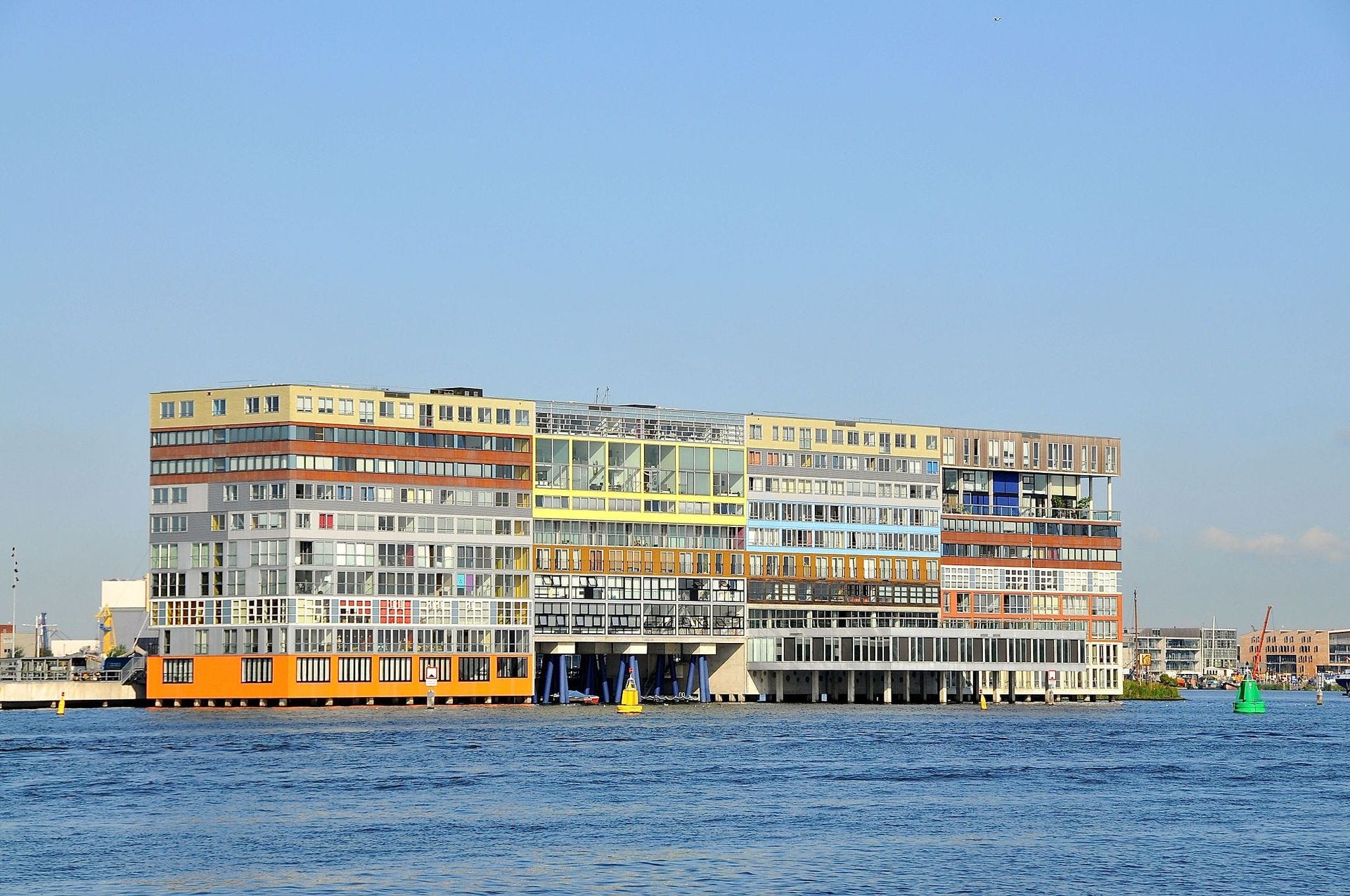
This structure looks alternately like a multicolored layer cake and then a series of cleverly assembled shipping containers. Silodam is a mixed-use and residential project located in the Houthaven section of Amsterdam. It was designed by Rotterdam architects MVRDV.
According to the authoritative website, arquitecturaviva.com/
Located on the Ij River in Amsterdam, the Silodam houses a mixed program of 157 apartments, shops, offices, retail areas, and public spaces. The different uses are stacked in ten levels over the water with a structural grid of piles and loadbearing walls, generating a compact block that evokes a huge docked ship packed with containers.
Van Gogh Museum
Photo: Sebastian Koppehel
The Van Gogh Museum website gave us a brief description of its early history:
The Van Gogh Museum was created through a unique contract between Vincent van Gogh's heirs and the Dutch state. After Vincent van Gogh's death, a large portion of his art remained preserved within the family, but they were concerned that the collection would eventually be dispersed. In 1962, the family and the government reached a special solution. The family transferred the entire collection – over 200 paintings, five hundred drawings, eight hundred letters plus other art that the family had collected over the years – to the specially established Vincent van Gogh Foundation.
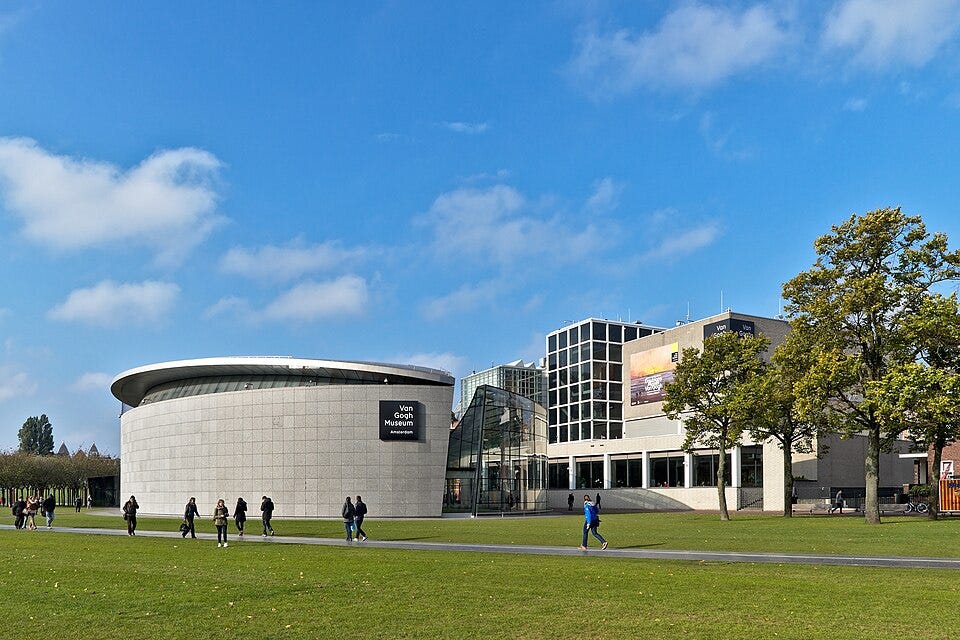
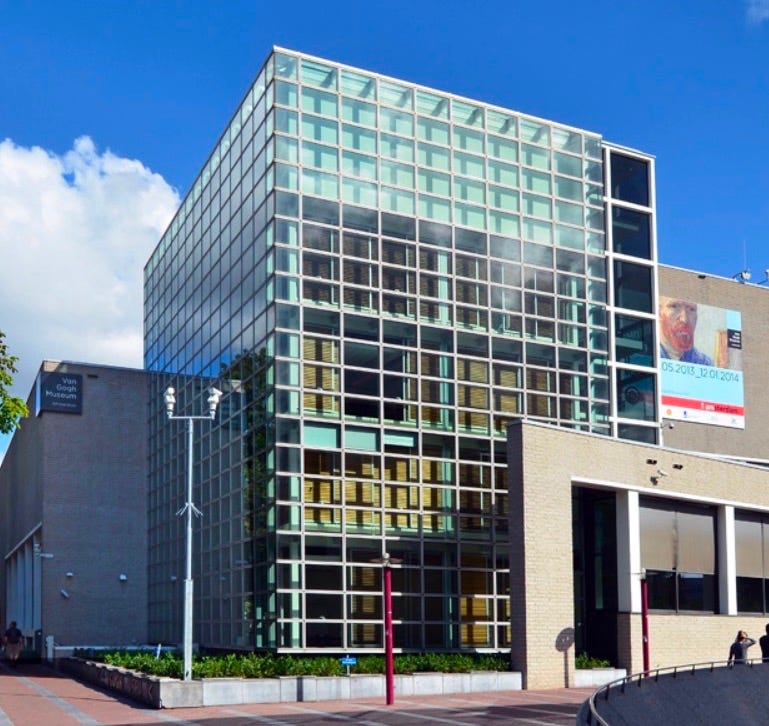
The Museum is actually three distinct architectural efforts. The Main Building, also known as the Rietveld Building, opened in 1973. Imagine the challenge of designing the Van Gogh Museum! Can the architecture meet the moment, given the inevitable comparison to the artist's body of work?
In 1963, renowned De Stijl architect Gerrit Rietveld was selected. Let’s take a moment to quickly review the De Stijl movement for background information.
According to the architectural historian, Ashley Gardini:
De Stijl (The Style) was an early twentieth-century avant-garde movement founded in 1917 by two Dutch artists, Piet Mondrian and Theo van Doesburg. Mondrian and van Doesburg believed that their style of art, based on strict geometric forms and a simplified color palette, would bring unity to the world.
Rietveld Building- photo: George Rex
Ms. Gardini also commented on the particular approach of Mr. Rietveld:
Rietveld’s architectural design emphasized the geometric forms of the building in the same way as would a De Stijl painting.
This original building was widely lauded, but eventually the Museum's popularity and sheer number of visitors overwhelmed it. More space was required. A new building was opened in 1999, designed by Japanese architect Kisho Kurokawa.
The museum website said this of Mr. Kurokawa’s work:
All his major design principles are reflected in the exhibition wing—for example, the symbiosis between environment and architecture, and between Japanese and European culture. As a contrast to Rietveld’s cube, Kurokawa opted for asymmetry—the building is elliptical and the box-shaped print room is at an angle to the axis of the wing.
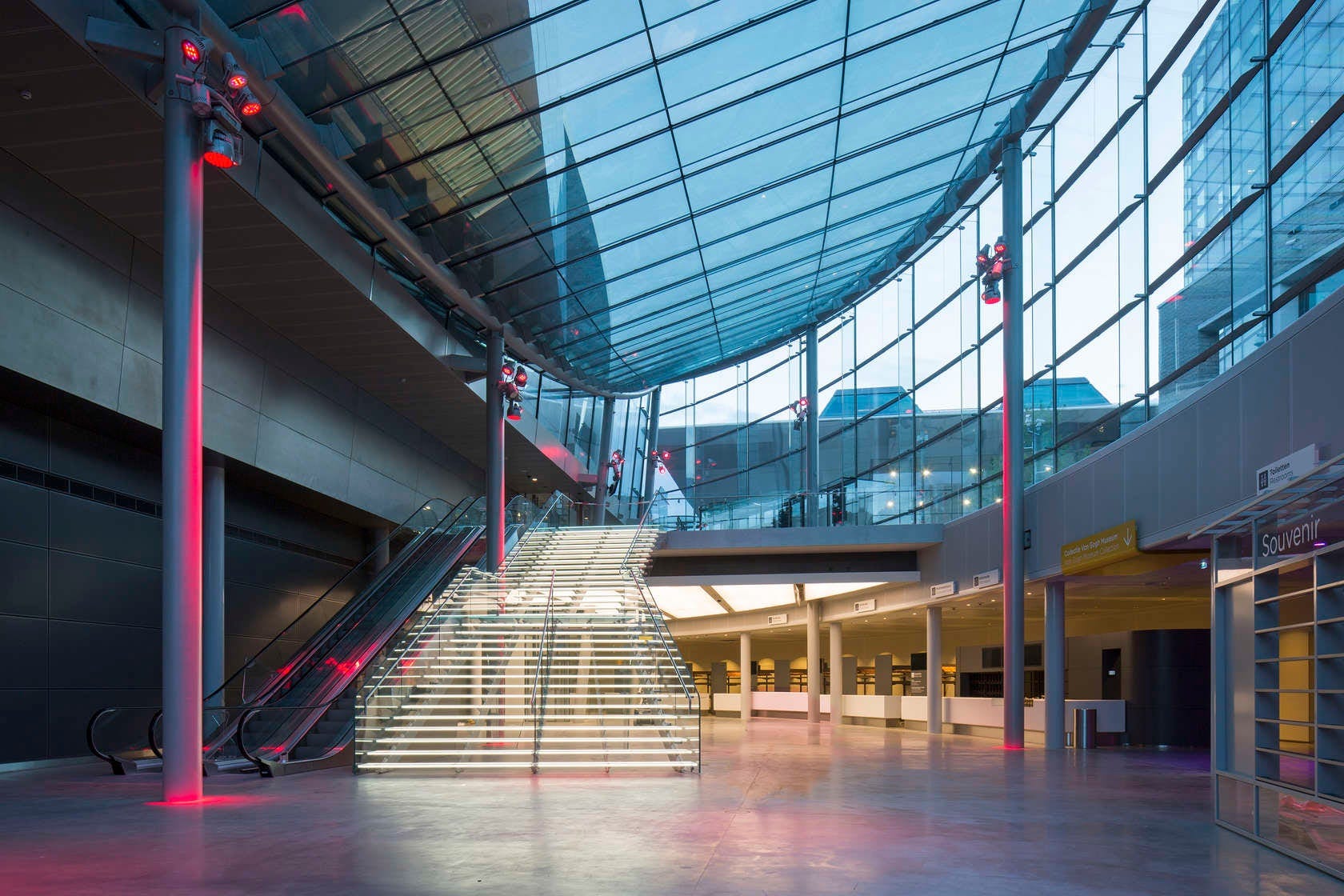
The new addition by Kurosawa did a fine job of accommodating the number of visitors the museum attracted. Nevertheless, another piece was needed. The answer was a new entrance in 2015 to better organize and orient the visitor experience. This structure was designed by Hans van Heeswijk of Amsterdam-based firm Hans Van Heeswijk Architects.
Museum entrance - Photo: museum website.
Writing in architizer.com, architect-trained editor and writer Paul Keskeys said:
The architects’ main aim was to create an atrium in which there was a great clarity of space and a clear path for visitors to quickly orient themselves….While the building is designed as a largely functional space, it possesses a touch of refinement and sophistication that Van Gogh himself would surely approve of.
The museum welcomed a record high of over 2.25 million visitors in 2017. Since then, management has sought to cap attendance at slightly under 2 million per year.
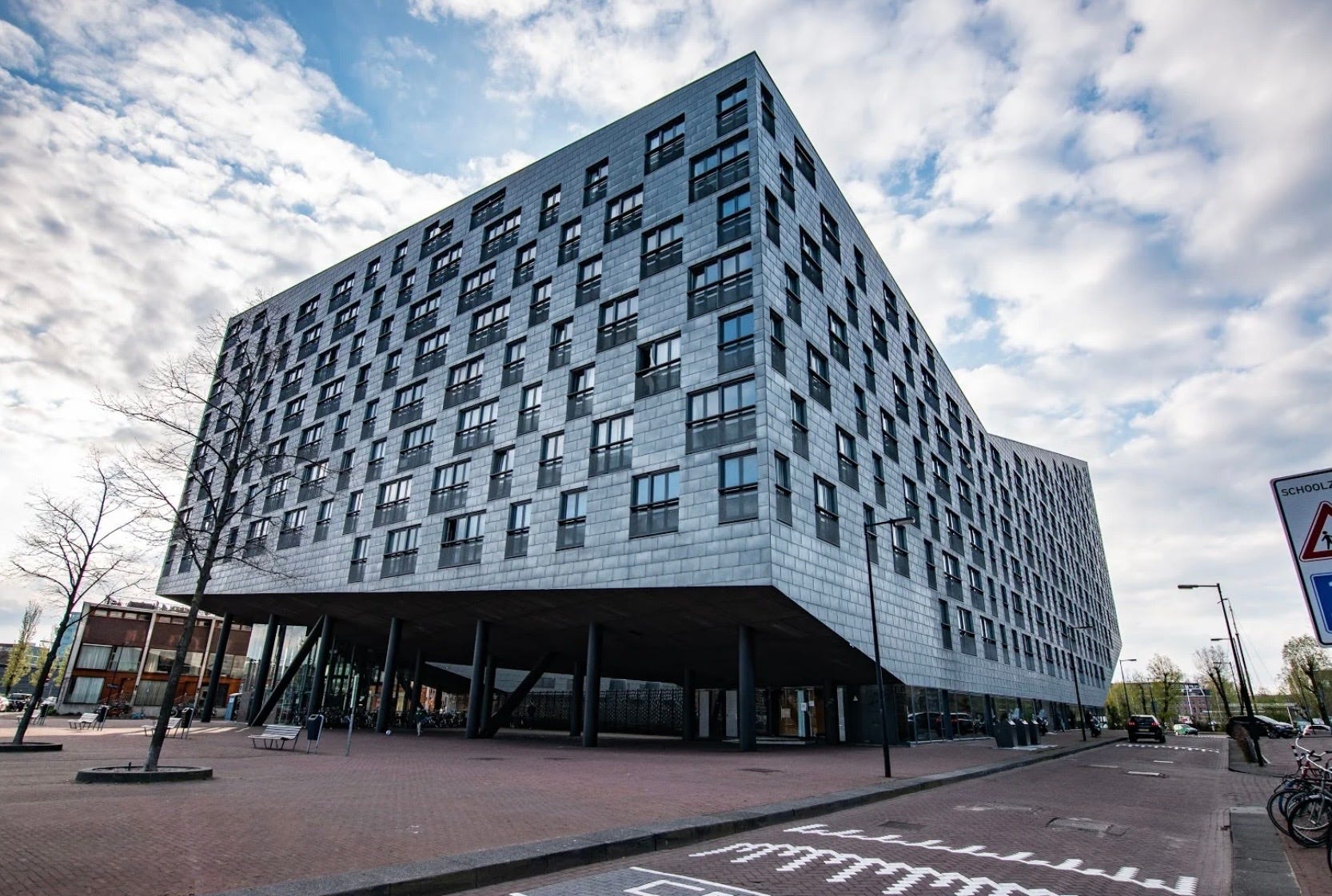
The Whale
Photos: Courtesy of de Architekten Cie.
The Whale is a residential and mixed-use project in Amsterdam’s Borneo-Sporenburg area, opened in 2000, and designed by Dutch firm de Architekten Cie.
The informative online publication, MAS Context, described The Whale:
With two sides of the building elevated, the lower floors receive sunlight coming in from under the building. Light and space have free access into the heart of the building, redefining the typology of the closed block: the inner area transforms the traditionally private domain into an almost public city garden.
Eye Filmmuseum
Photo: jvhertum
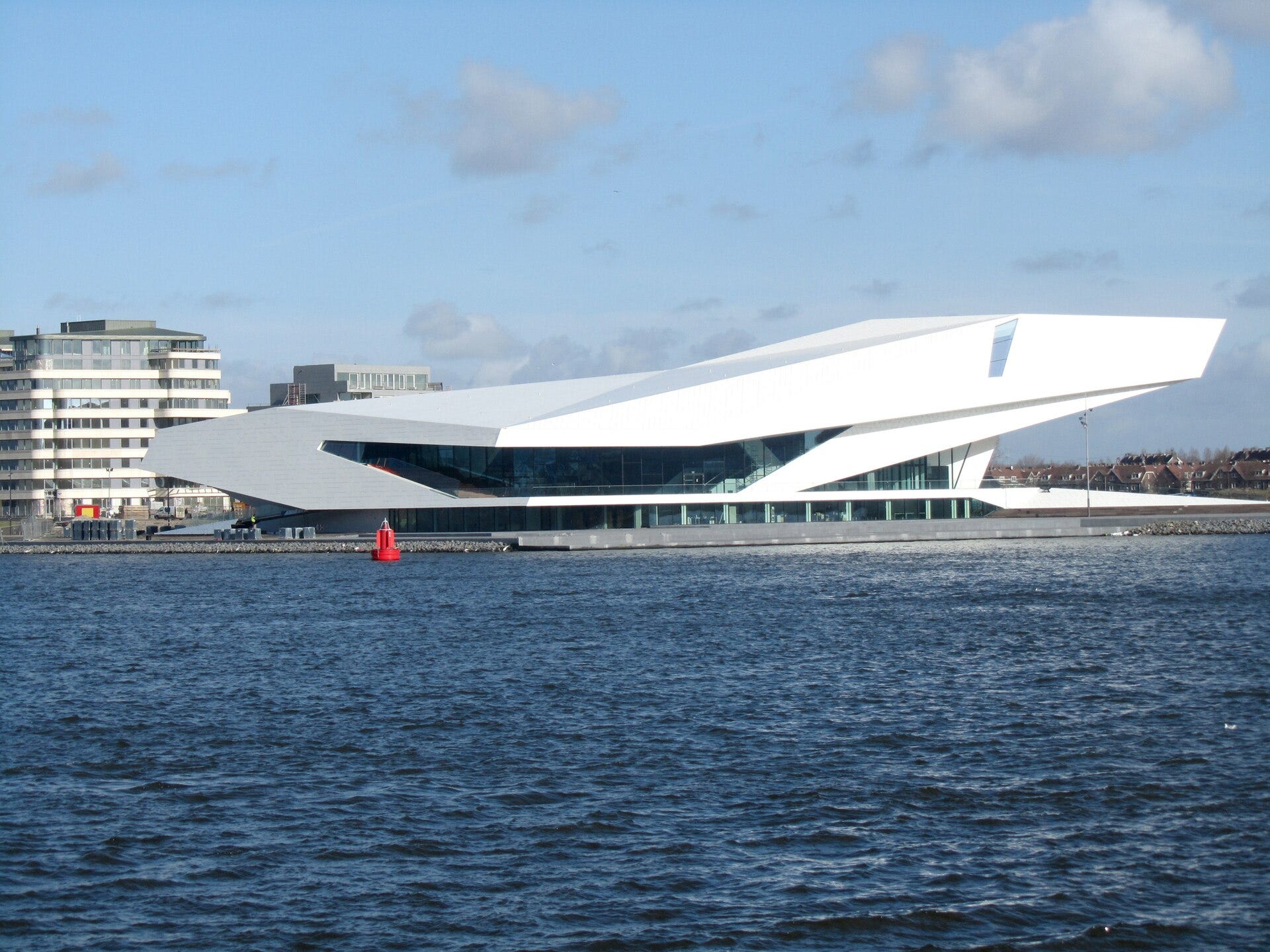
The EYE Filmmuseum in Amsterdam is located on the river Ij. It was completed in 2011 and designed by Delugan Meissl Associated Architects (DMAA).
According to DMAA:
The building is conceived as a highly tense and dynamic geometric solid. The light is reflected in multiple ways by smooth, crystalline surfaces, thus subjecting the building’s appearance to permanent optical changes during the course of the day. Movement and light manifest themselves clearly as essential parameters for the film as a medium in the architectural production. The entrance into the building is characterised by continuous spatial concentration and directed visual relations. Spatial development, light incidence, and materiality define the path that leads from the southern glass front and the museum shop into the heart of the building.
The online publication, archello.com, said:
The attractive building cannot be missed as it rises from the banks of the IJ river and guarantees a different appearance depending on your point of view. The building opens up towards the south with large areas of glazing. Closed areas of the façade are directed northwards, offering room for cinemas and exhibition areas in the interior.
It seems that Amsterdam has carefully cultivated its Bohemian image in post-war Europe. On the other hand, it has also lived up to that flamboyant civic persona. The snapshot of modern architectural projects that we have reviewed speak to a tolerant citizenry open to creative advancement in the arts, including architecture.
Architecture for the Soul is a reader-supported publication. Please consider becoming a paid subscriber.