
Burj Khalifa
The worlds tallest structure (currently)

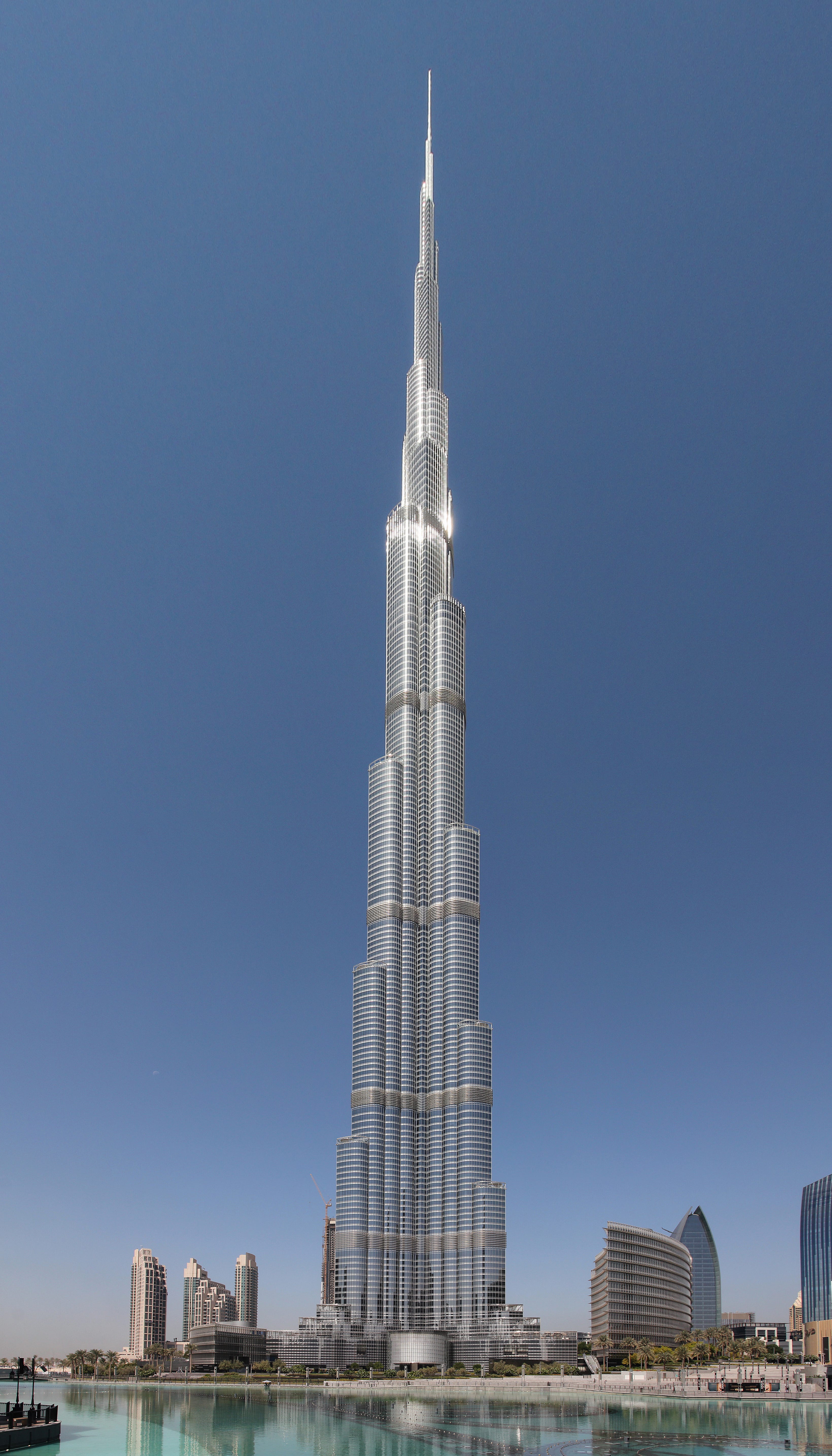
The Burj Khalifa in Dubai is classified as a megatall skyscraper. A Skidmore, Owings & Merrill design, it is currently the world’s tallest structure, surpassing Taipei 101 in Taiwan at just over half a mile high.
What would drive the construction of such a structure? The answer is relatively simple. Dubai and the United Arab Emirates (UAE) have pursued various tactics in order to achieve their overarching strategic objective of securing a place at the table of world prominence. One of these tactics was to build a landmark that would be instantly recognizable worldwide. A symbol of both the city and the country. To that end, the state-sponsored Royal Journey Tourism website tells us:
The Burj Khalifa holds profound significance for the United Arab Emirates, representing not only architectural achievement but also national pride. It stands as a symbol of the UAE’s rapid development and modernization since its formation in 1971. The building embodies the vision of the country’s leaders, particularly Sheikh Khalifa ibn Zayed al Nahyan, who emphasized the importance of innovation and ambition. The Burj Khalifa’s construction reflects the UAE’s commitment to becoming a global player in various fields, from tourism to business and culture.
Construction was completed in 2010, SOM had completed the design in 2006. The renowned architectural firm described some of their inspirations and solutions below:
The design for the tower is inspired by the geometries of a regional desert flower and the patterning systems embodied in Islamic architecture. Built of reinforced concrete and clad in glass, the tower is composed of sculpted volumes arranged around a central buttressed core. As it rises from a flat base, setbacks occur in an upward spiraling pattern, which reduces the building’s mass as it reaches skyward. At the pinnacle, the central core emerges and is sculpted to form a spire.
The responsibility borne by the SOM design team must have been immense. They were tasked with creating the tallest structure in the world—one meant to symbolize both a city and a nation, while incorporating elements of religious architecture and natural influences. That is an extraordinarily ambitious goal.
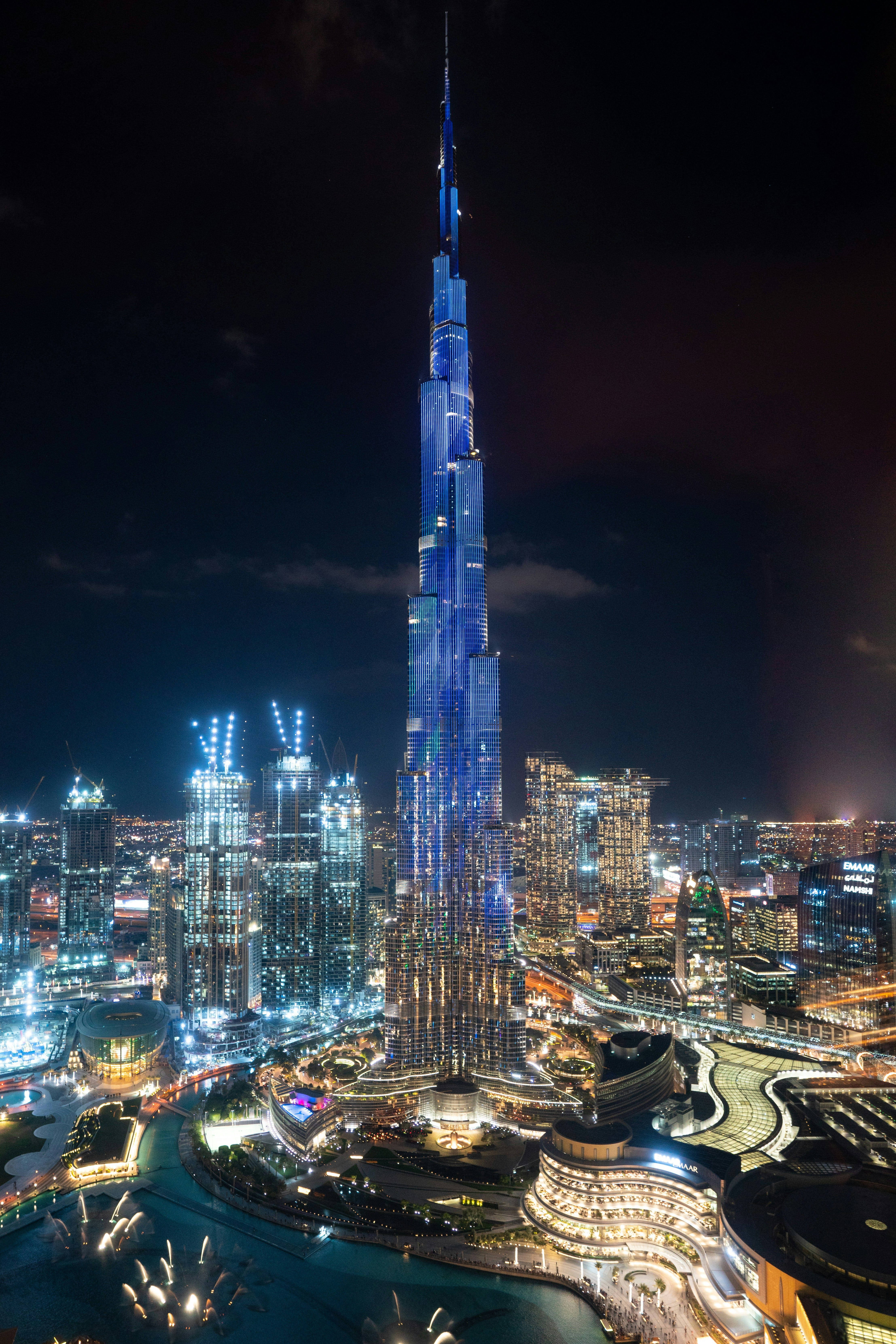
Perhaps it was a stroke of good fortune for all parties concerned that Skidmore was selected for this project. Given their corporate resume of mid-century projects that are now architectural landmarks. The Sears Tower, One World Trade Center, the John Hancock Center, and Lever House, to name just a few.
As a mixed-use building, the Burj contains private residences, a variety of commercial enterprises, including construction and real estate firms, restaurants, an Armani-branded hotel, and significant spillover from the proximate Dubai Mall, which collectively attract approximately 17 million tourists per year.
The architecture, engineering, and construction techniques capable of producing a structure nearly twice as tall as the Empire State Building warrant a brief review.
According to the building www.burjkhalifa.ae:
The design concept and architectural style: Burj Khalifa base features a triple-lobed footprint inspired by the regional desert flower Hymenocallis. The basic structure of the tower is composed of three wings arranged around a central hexagon core. Burj Khalifa employs a Y-shaped floor plan with setbacks along each of its three wings. The shape and the upward setbacks provide a stable configuration for the structure and maximise views of the Arabian Gulf.
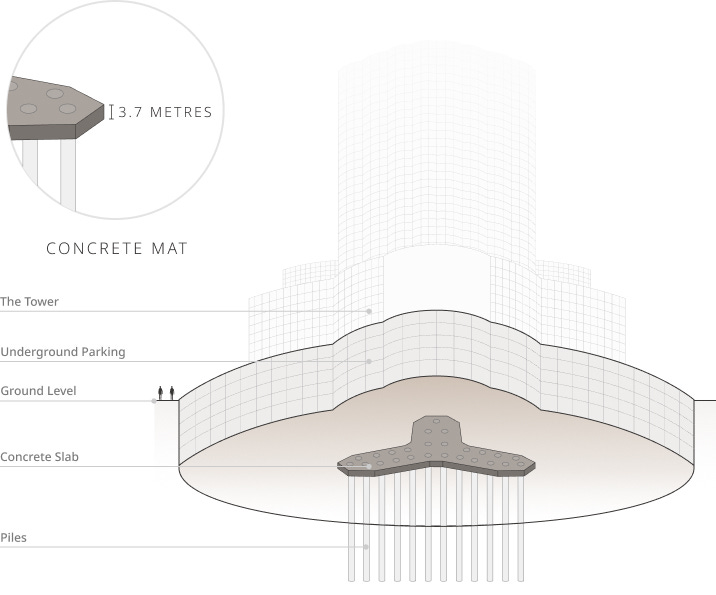
The concrete pad above is, again according to the building website, supported by 192 concrete piles that are about 1.5 meters in diameter and 43-50 meters long. This brings us to one of the fundamental elements of building the Burj Khalifa and many other supertall skyscrapers: the buttressed core.
Buttressed Core
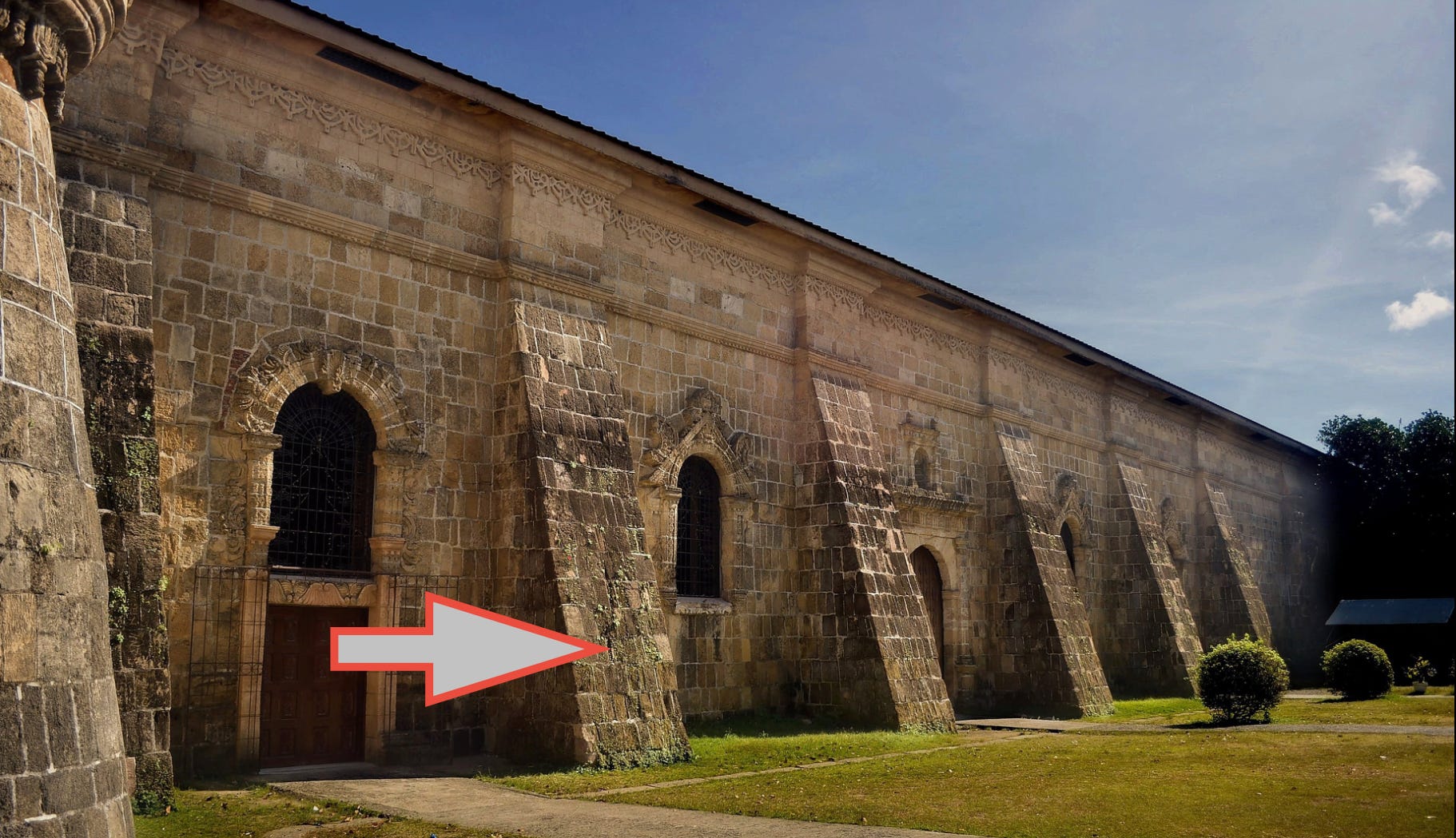
Let’s start with the basic buttress. Simple buttresses are shown below at the Miag-ao Church in the Philippines, where they support an equally simple stone wall.
A buttressed core is an advanced structural system often used in supertall high-rise buildings. As shown below, it features a hexagonal central core strengthened by three projecting buttresses arranged in a Y-shaped configuration, providing exceptional stability against wind and seismic forces.
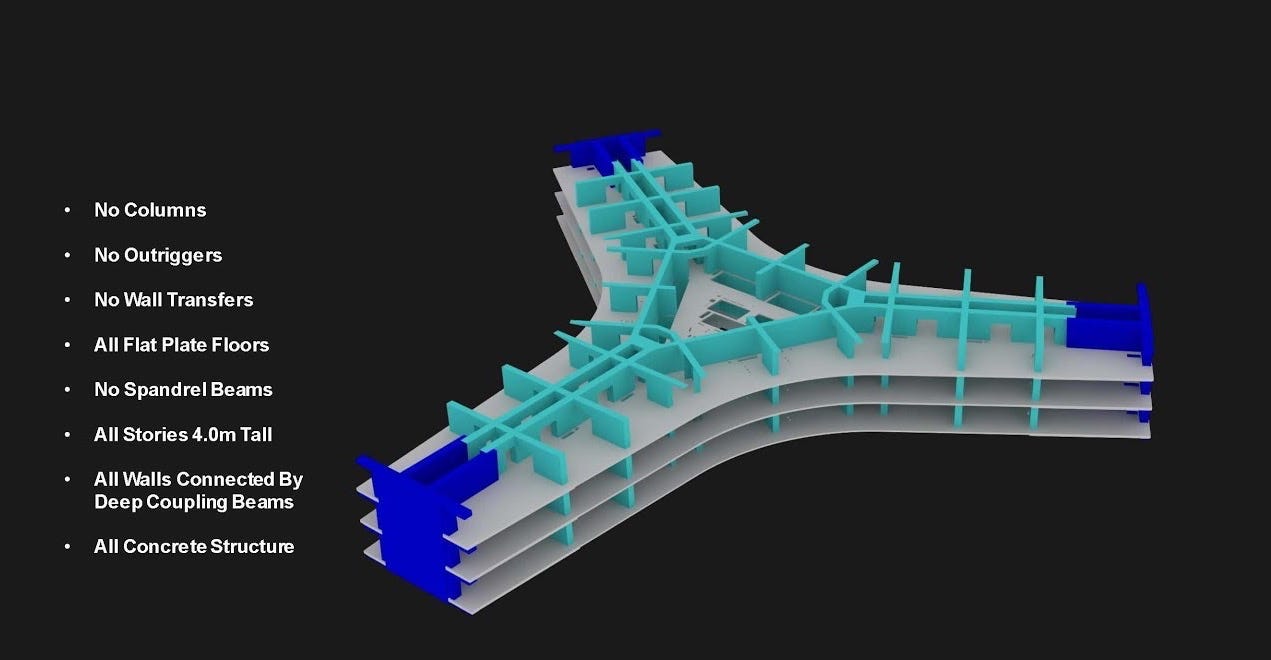
Skidmore, Owings & Merrill structural engineer Bill Baker is widely credited with pioneering the modern use of the buttressed core. Baker himself, however, acknowledged the foundational contributions of earlier engineers, including Fazlur Khan, Hal Iyengar, William LeMessurier, and Leslie Robertson, whose innovations helped shape the system’s development.
In previous posts, we have discussed the use of Tuned Mass Dampers to minimize wind-driven lateral motion in Supertall structures. A video on TMDs is available here. The buttressed core in the Burj Khalifa help eliminate the need for a TMD.
Unitized curtain wall
The unitized curtain wall requirements for the Burj demanded a curvilinear coated glass curtain wall designed to reflect the brilliant but harsh sunlight of the desert. Another somewhat unique requirement was to lessen the buildup of dust driven by the inevitable sand storms. In using The Pilkington Planar™ structural glazing system the curvilinear facade was achieved from flat panels.
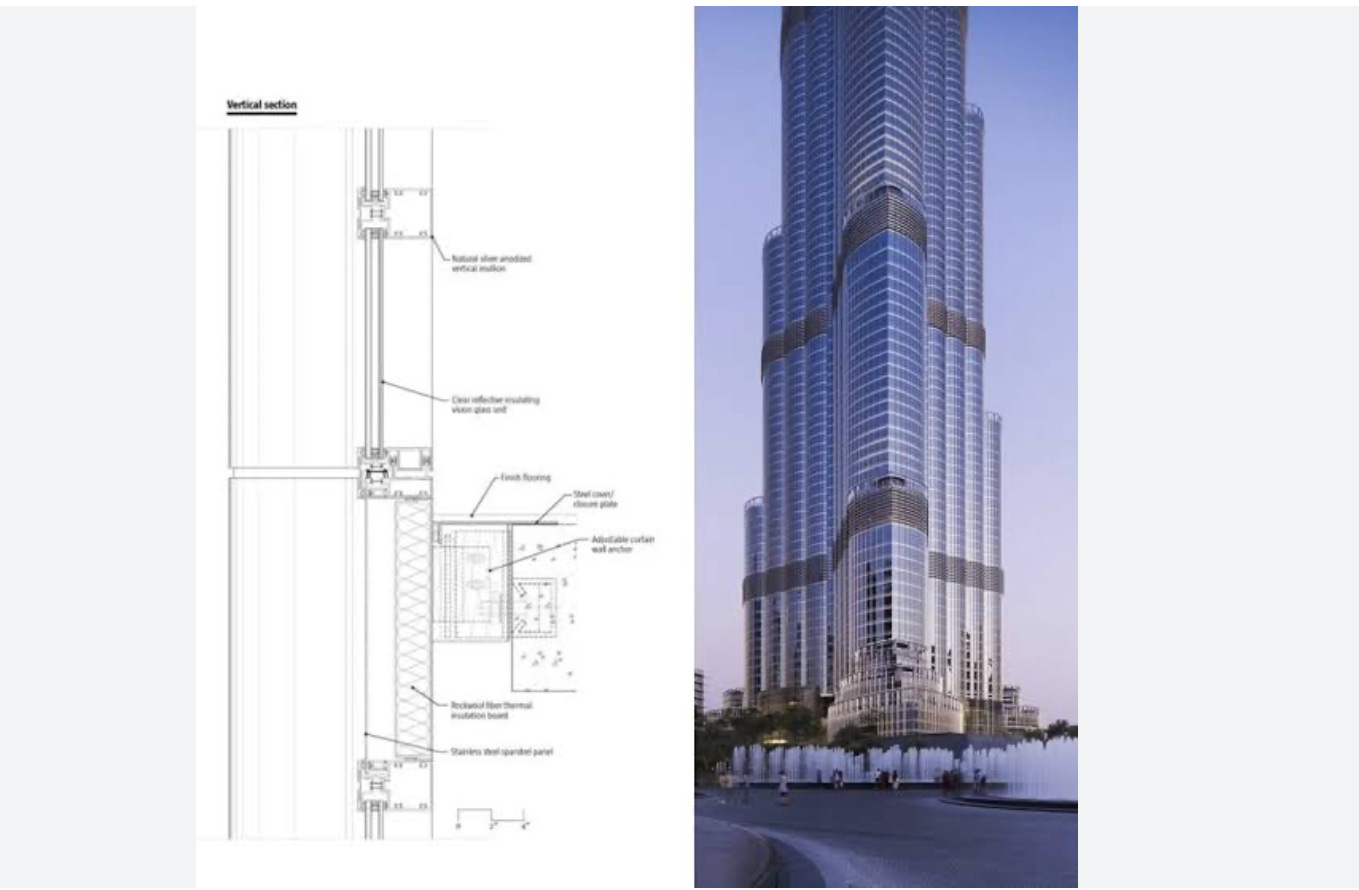
Gideon Fink Shapiro a writer based in New York City gave us more information on the glass curtain wall when he wrote in Architect Magazine:
Adrian Smith, who was the skyscraper’s lead designer before leaving SOM in 2006, says the façade is curved in order to disperse sunlight. The reflective coating–Sunguard Solar Silver 20, which transmits only 20 percent of visible light and 15 percent of solar energy–would have turned a flat curtain wall into a blinding mirror. Since curved glass was beyond the budget, the rounded effect was achieved with flat panels whose angled joints are concealed behind the fins. To mitigate the inevitable buildup of dust, the panels have no horizontal ledges. Automated window-washing machines are housed at four heights along the elevation.
There are many interesting fun facts about the Burj Khalifa, such as the elevator system which has the worlds longest single run of 140 floors. The car moving at 10 meters per second.
But let’s begin to close this post with a fun video of Tom Cruise using the building in the film Mission Impossible: Ghost Protocol.
Final Words
The oil-rich states of the Middle East—and their ultra-wealthy citizens—have long been accused of attempting to “polish” their international reputations by leveraging vast fortunes to host global spectacles such as the FIFA World Cup or by investing in elite football clubs like Paris Saint-Germain, Newcastle United, and Manchester City.
If, as previously discussed, the Burj Khalifa represents a similar effort by an oil state to elevate its standing on the world stage, so be it. This is a Substack newsletter about architecture, not geopolitics. With that in mind, perhaps we can choose to judge the tower purely on its architectural and engineering merits—setting broader political considerations aside.
Architecture for the Soul is a reader-supported publication. Please consider becoming a paid supporter. WE NEED YOUR HELP!