
Modern German Post-War Architecture
Part One: Eight Commercial/Municipal Projects of note

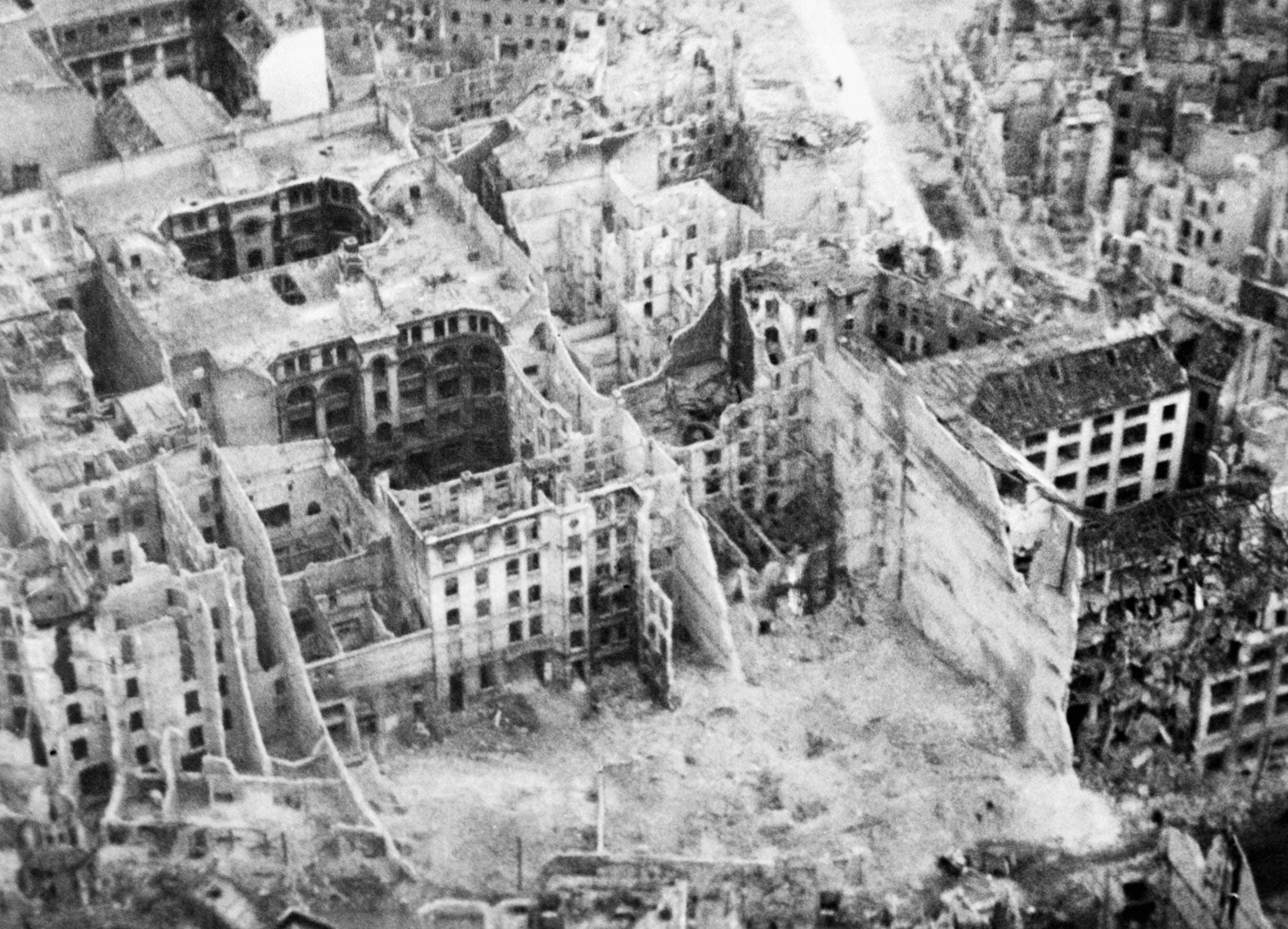
Given that American soil emerged from World War II largely unscathed, it can be difficult for Americans to grasp the near-total devastation inflicted on German cities by Britain’s Bomber Command and the U.S. Eighth Air Force. This is not an attempt to excuse or diminish the horrors perpetrated by Hitler and the Nazi regime. Rather, it serves as context for understanding the monumental task of reconstruction and the architectural paths Germany pursued in rebuilding its cities.
The first question must have been how to fund the rebuild. The Marshall Plan was reported to have provided approximately 1.4 billion dollars for West German recovery. The post-war German economy also benefitted from the Deutschmark replacing the forlorn Reichsmark.
New National Gallery - Berlin 1968
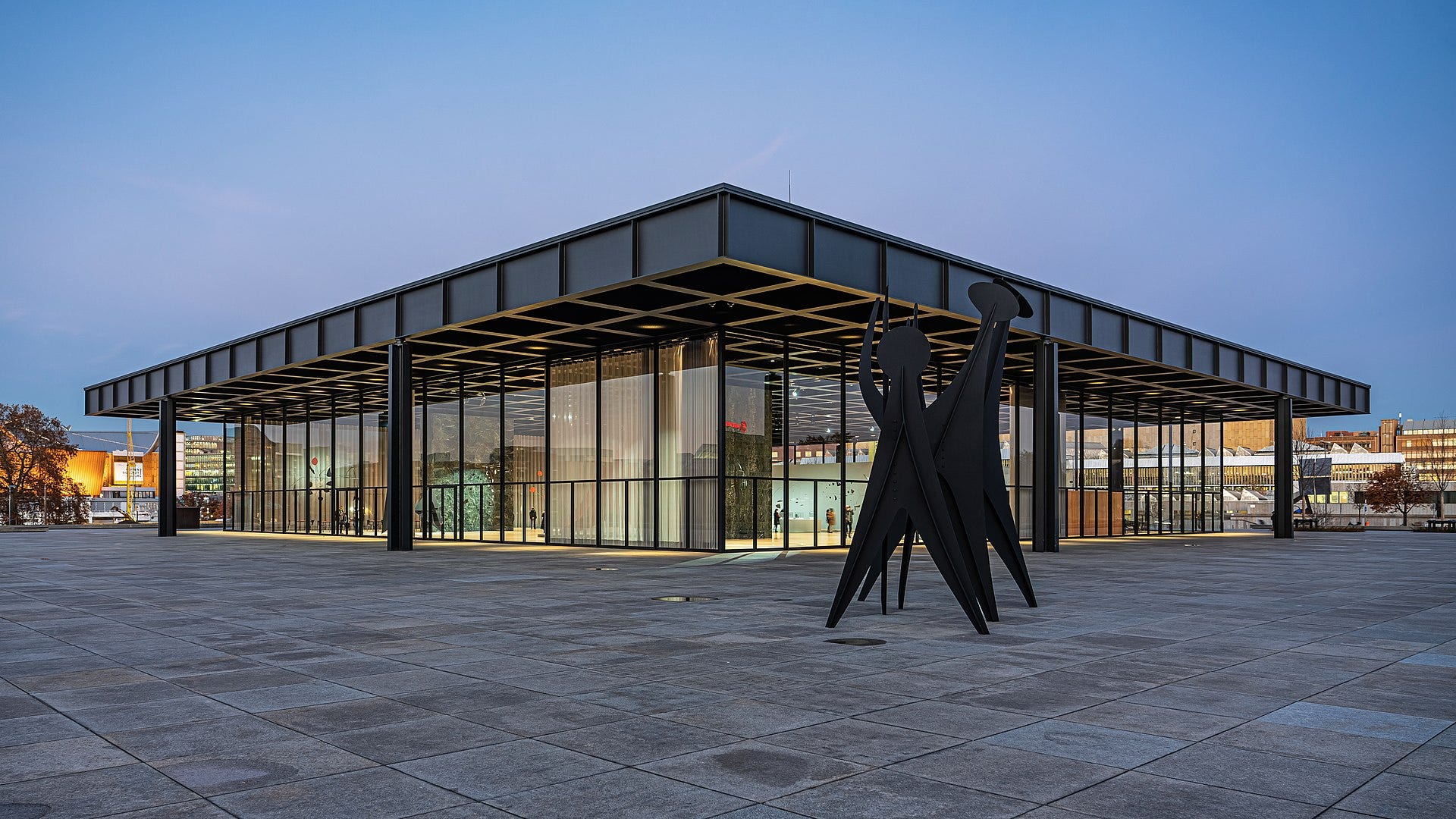
Mies Van Der Rohe left Germany in 1937-38, emigrating to the United States as the Nazis rose to power. There, he attained even greater international prominence than he had in Germany. In 1962, he was invited back to design this project. The result, as one of his very last works, is a steel-and-glass structure that exemplifies the Van der Rohe ethos.
MOMA Curator, Martino Stierli, said this upon its completion:
The New National Gallery in Berlin is basically made up of one big empty space that is confined by glass walls. And this space is squeezed in by two horizontal planes: a monumental cantilevering roof, made out of metal
Berlin Hauptbahnhof (Berlin Central Station) 2006
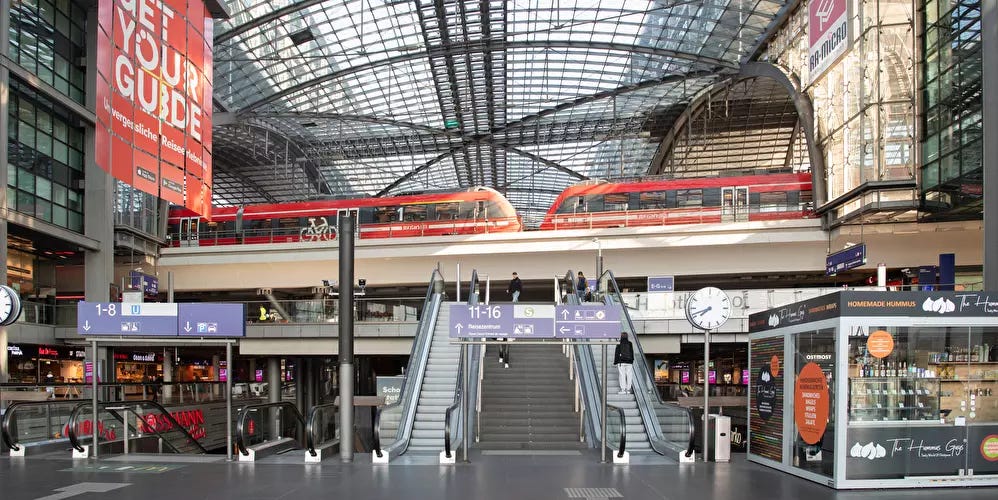
In 1993, a design competition for a new Train Station in central Berlin was held. The Hamburg architectural firm Gerkan, Marg and Partners emerged victorious, with Meinhard von Gerkan leading the design. The resulting station has been lauded as memorably modern and bright, and a standard for public transport stations moving forward. The project stands as both an architectural and engineering tour de force.
Jewish Museum Berlin 2001
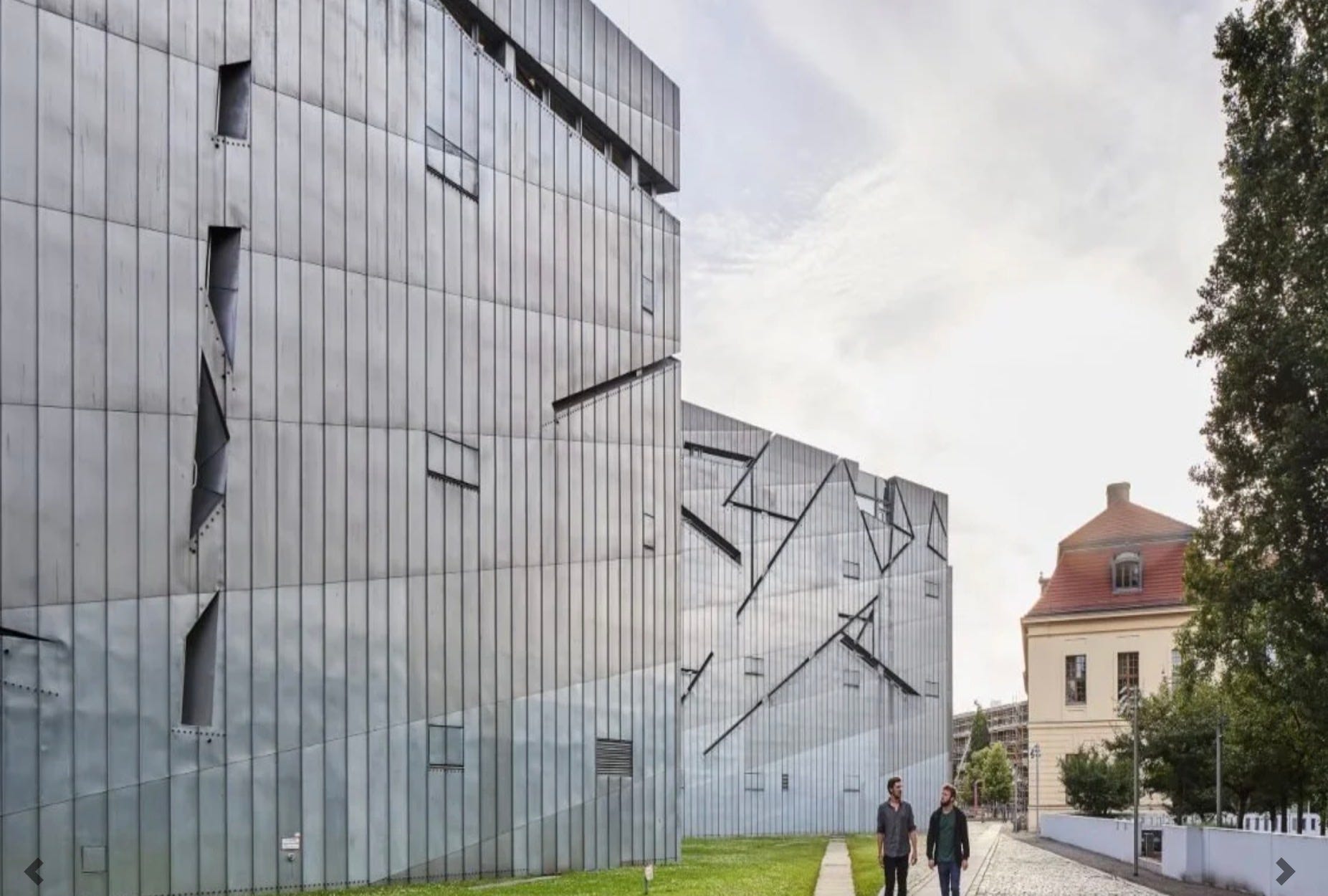
Designed by Daniel Libeskind. His firm characterized the work below:
The Jewish Museum Berlin, which opened to the public in 2001, exhibits the social, political and cultural history of the Jews in Germany from the fourth century to the present, explicitly presenting and integrating, for the first time in postwar Germany, the repercussions of the Holocaust. The new building is housed next to the site of the original Prussian Court of Justice building which was completed in 1735 now serves as the entrance to the new building.
Daniel Libeskind personally described his work:
It’s an experience, and some of it is foreboding. Some of it is inspiring, some of it is full of light. Some of it is dark, some of it is disorienting, some of it is orienting. That was my intent in creating a building that tells a story, not just an abstract set of walls and windows.
Elbphilharmonie (Elbe Philharmonic Hall) Hamburg 2017
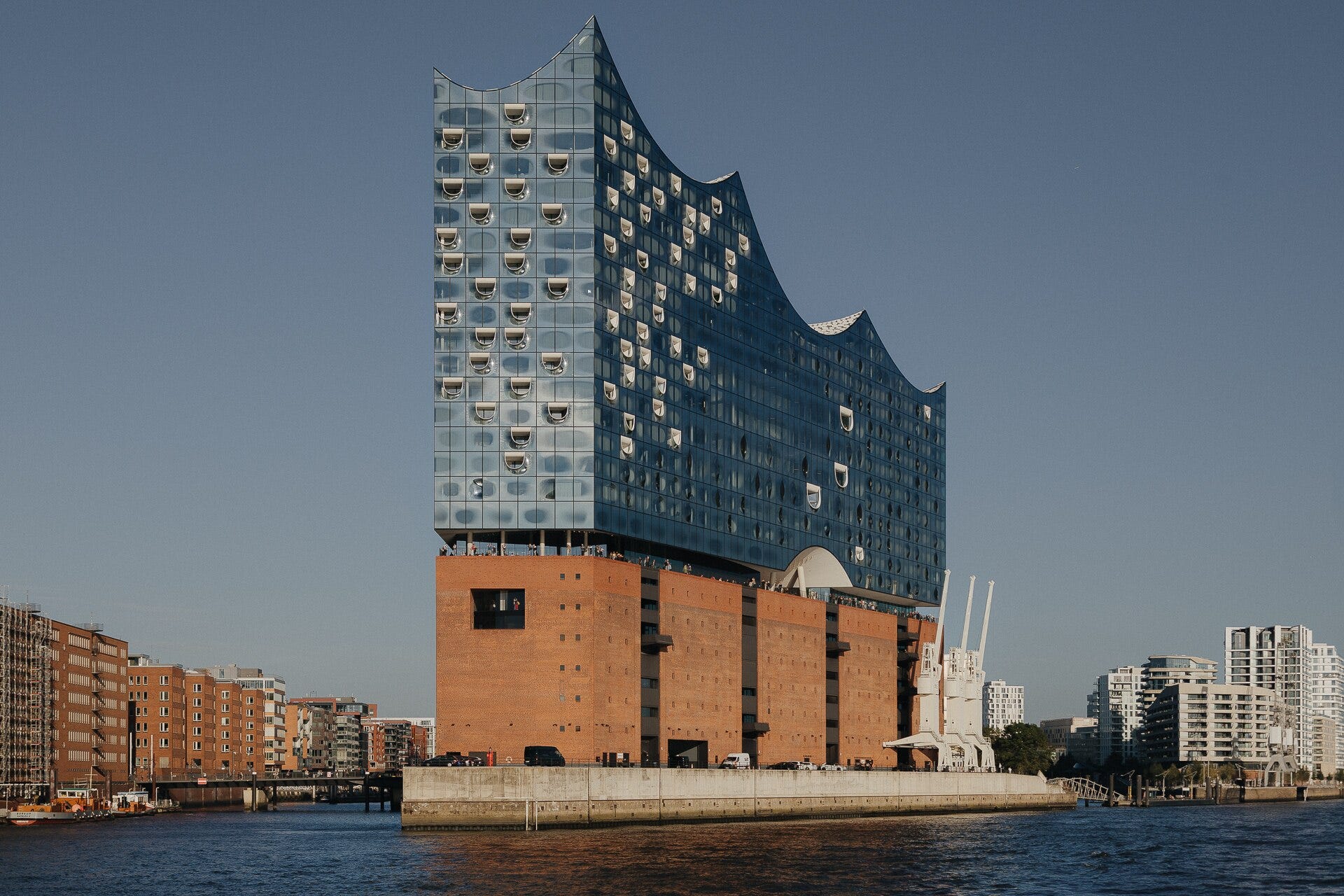
The Elbphilharmonie, located in Hamburg’s harbor district, was designed by the Swiss firm Herzog & de Meuron and represents an innovative approach to concert hall design. As an unreformed Modernist, my heartbeat still quickens at the prospect of a new glass-and-steel designed high-rise. Yet Herzog & de Meuron’s decision to perch such a modernist form atop an existing brick warehouse suggests a compelling expansion of how Modernist principles can be creatively applied.
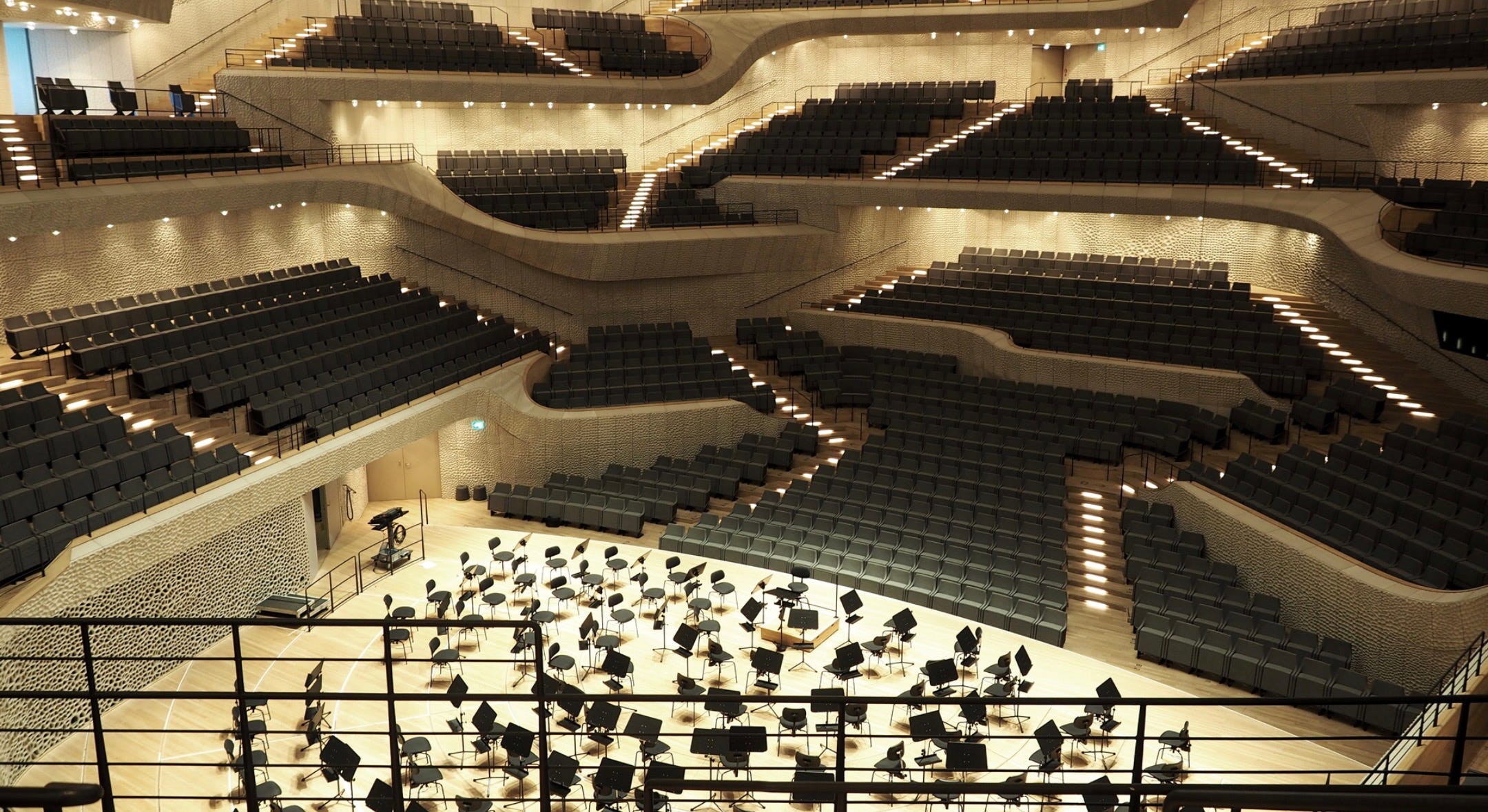
Architecture critic Rowan Moore opined below:
The Elbphilharmonie, to give it its proper name, offers a sequence of visual and architectural otherworldliness that starts with distant glimpses from the centre of the city and doesn’t stop when you reach your seat in one of its three auditoria, of 2,100, 550 and 150 seats. Its exterior, 110 metres high, is glassy and opalescent, curvy on top, above the brick block of the warehouse, a crystal on top of a rock, teetering because bigger than its base, but also lighter looking. Alternatively – and if metaphors are mixed it’s because the building provokes it – it is a cloud on a cliff, a sail, a wave, a ship, an iceberg, a tent. The main auditorium is both bubble and cave, its surfaces unified with a wrinkled, variegated, fascinatingly repellent surface that its architects call “white skin” but is really greyish and not-human, more pachydermic, dinosaurian or alien, or rather, as it’s hard, like moon rock.
The contrast between the modernist structure atop the brick warehouse certainly creates an interesting conversation piece. However, conversation pieces do not necessarily good architecture make. In this case, I would vote that the overall product of the design process is both attractive and functional.
The Nordic Embassies Berlin 1999
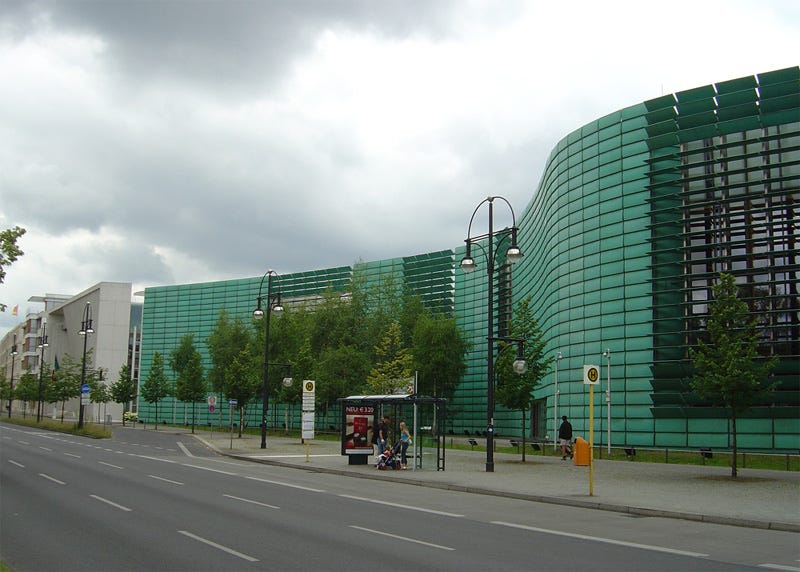
This is an unusually distinctive program: of the six buildings, five house the official embassies of Denmark, Iceland, Norway, Sweden, and Finland, while the sixth serves as a shared community facility. The overall master plan was developed by Alfred Berger and Tiina Parkkinen of the Austrian firm Berger+Parkkinen Architects; however, each individual embassy was designed by architects from its respective country
IMOA is a non-profit trade association that made the following commentary on the project:
The overall concept of the site, designed by the Austrian-Finnish architects Berger and Parkkinen, perfectly captures the idea of a strong community. Arranged according to their location on the map, the embassy buildings are complemented by a shared cultural centre and event venue called "Felleshus". These six, uniformed-height structures are built in such a way as to create the illusion of sections that have been carved out of a single block. Intersecting paths and shallow ponds representing the seas simultaneously divide and link the buildings.
St. Trinitatis Church Leipzig 2015


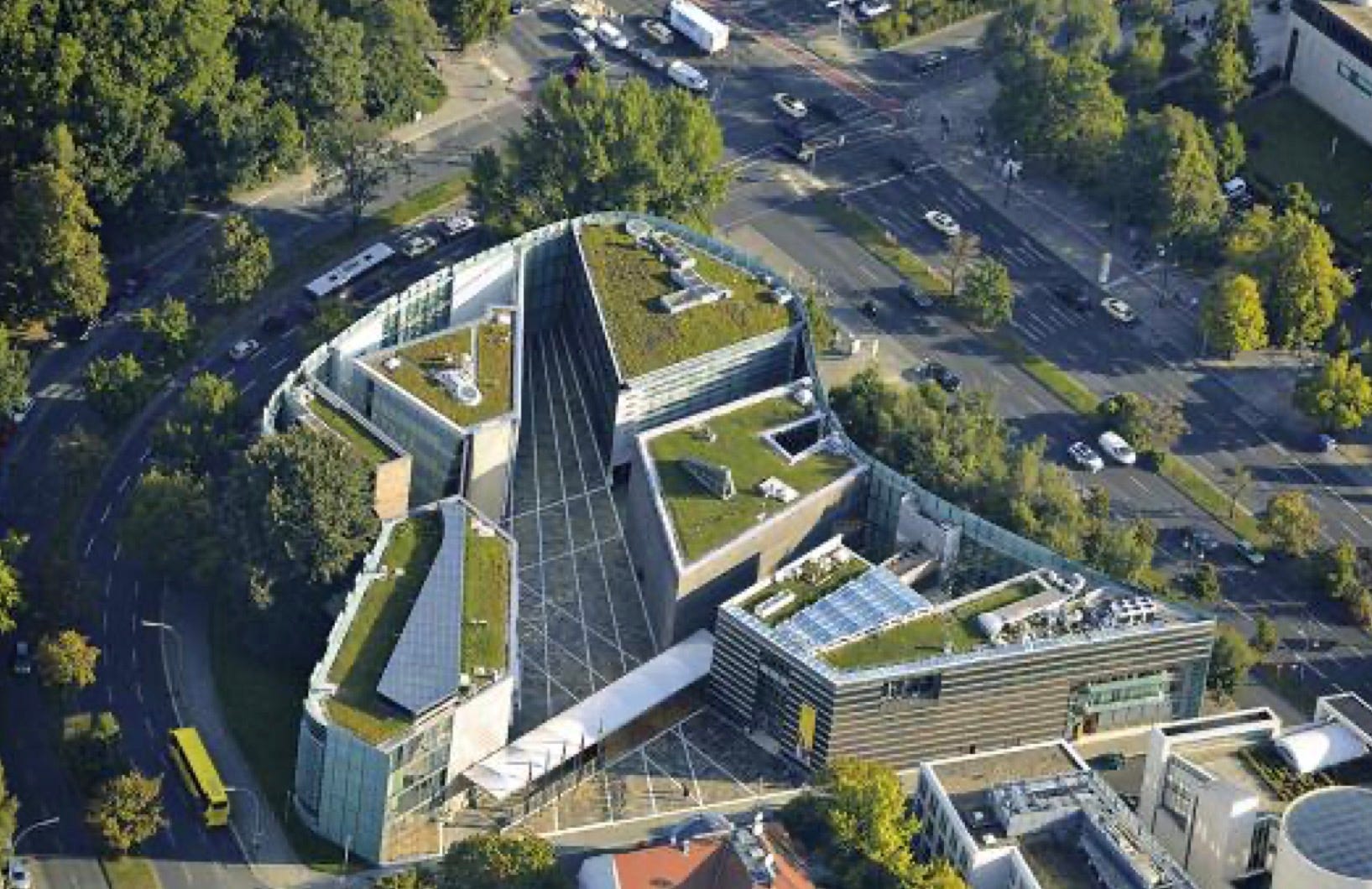
Leipzig, the site of this church, is located in the German state of Saxony and is its most populous city. After World War II, Leipzig became part of East Germany, a place not generally associated with architectural innovation or creativity.
Designed by the Leipzig architectural firm, Schulz und Schulz. The facade, composed of the relatively rare igneous stone known as Porphyry, makes a striking first impression! The architectural firm described the importance of the facade and stone:
The facade is made of Rochlitz porphyry. Using Rochlitz porphyry is continuing a tradition of construction in the city of Leipzig, such as with the Old Town Hall, and of the region, such as with the Benedictine Priory of the Holy Cross in Wechselburg. The horizontal layering of the various heights firmly anchors the building with the plot of land and allows it to symbolically grow out of the ground.
Reichstag Dome Berlin 1999
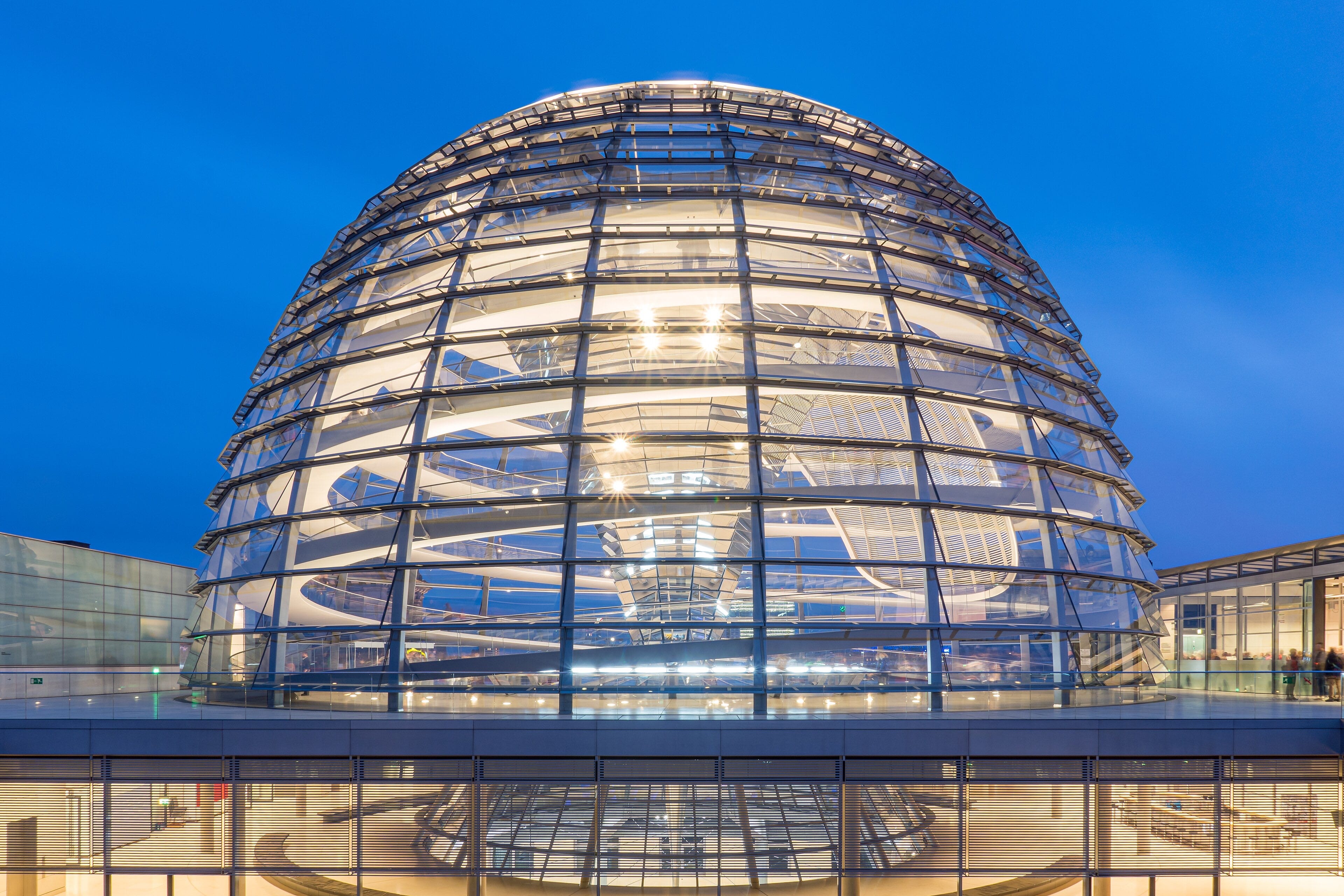
Bonn was the capital of West Germany from 1949 until 1990 and was also the capital of the post Cold War unified Germany until 1991, when the Parliament (Bundestag) decided to move the seat of government to Berlin. Sir Norman Foster and his firm, Foster and Partners, were commissioned to design a dome structure. The Bundestag website described the dome below:
The dome consists of 24 main steel ribs supported by a lower ring girder and framed at the top by another. The steel ribs have a triangular cross-section, which is constant at the bottom and tapers towards the upper ring girder. Horizontal bracing is provided by a total of 17 steel rings, which are mounted at regular intervals on the outer surface of the main steel ribs. These horizontal profiles are an integral part of the facade, supporting the glazing and the viewing platform.
Approximately 3,000 square meters of glass are used in the dome. The glazing consists of 17 stacked rows of 24-millimeter-thick glass panes, each containing 24 panes (5.10 x 1.70 m). The individual rows are arranged in an overlapping, scale-like pattern. The resulting spaces between the panes are also glazed. To improve ventilation of the dome, the bottom four rows remain unglazed.
BMW Welt Munich 2007
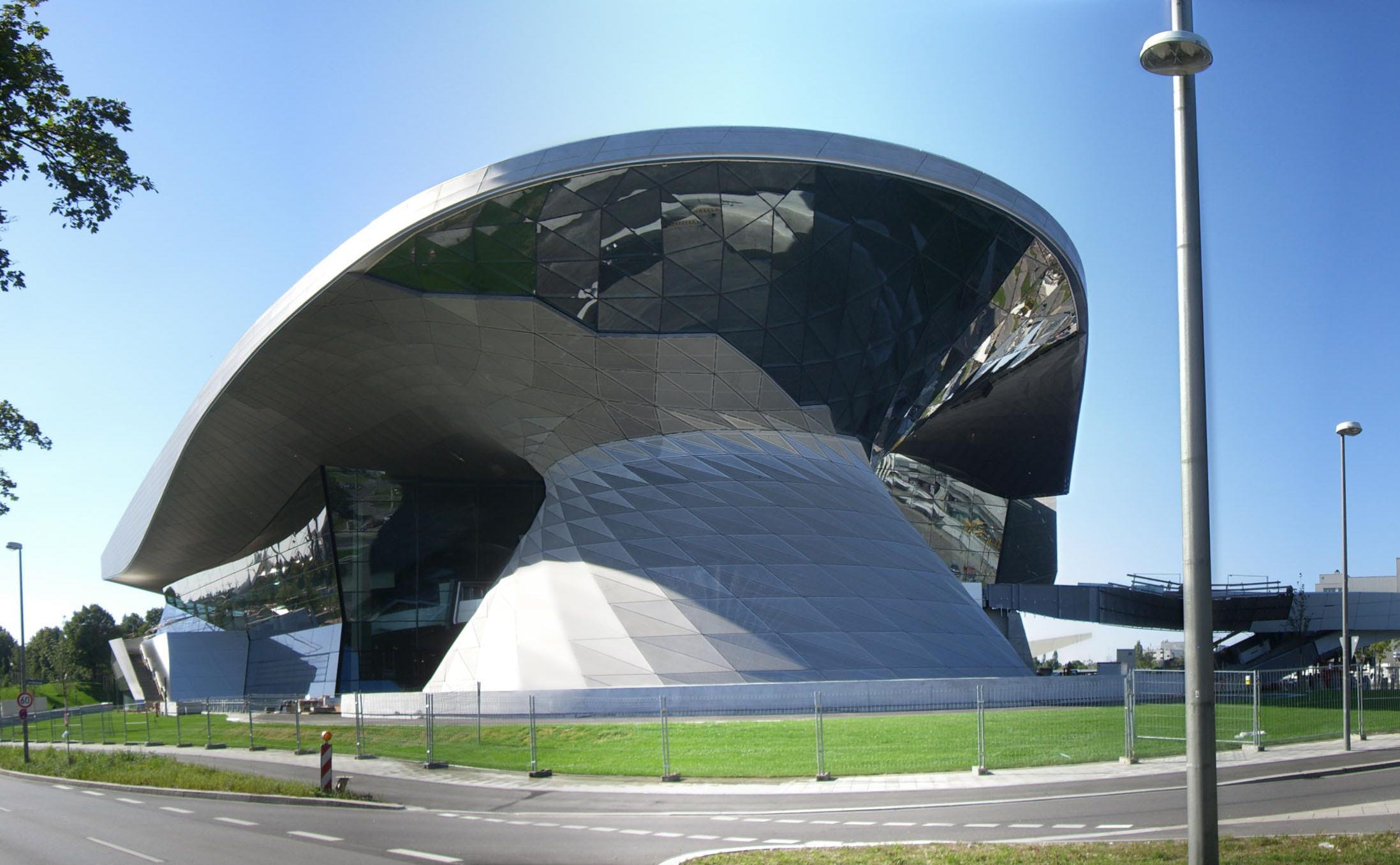
The BMW Welt (BMW World) is an exhibition space, vehicle delivery center, and advanced corporate promotional venue near BMW HQ in Munich. This landmark was designed by Wolf Prix of the Vienna-based architectural firm Coop Himmelblau. The architect commented below:
One of the central design ideas for the new BMW building was to expand the existing configuration of the BMW Tower and Museum with an additional element to create a spatial, ideal and identity-forming architectural ensemble.
When the products are “cool hip” cars … must the architecture also be cool and hip? I tend to think…yes. What do you think?
Conclusion
On my first trip to Germany in 1983, I was the guest of a globe-trotting husband-and-wife team. We arrived in Munich after an upgrade to first class on a Pan Am 747—yes indeed, champagne poured into real crystal flutes, steak served on china. Unbeknownst to me, I was beginning at the absolute pinnacle of transatlantic business travel. The lesson came four years later, courtesy of an Iberia Airlines flight: middle seat, coach class, smoking section!
But, more importantly than my travel amenities, I was amazed at the resilience and determination of the German people to find the collective fortitude to rebuild their country after the nearly total devastation of the World War.
Architecture for the Soul is a reader-supported publication. Please consider becoming a paid supporter. WE NEED YOUR HELP!
Let’s get Ostalgic! Plattenbau, baby