
Modern Indian Architecture
The sub-continent steps out

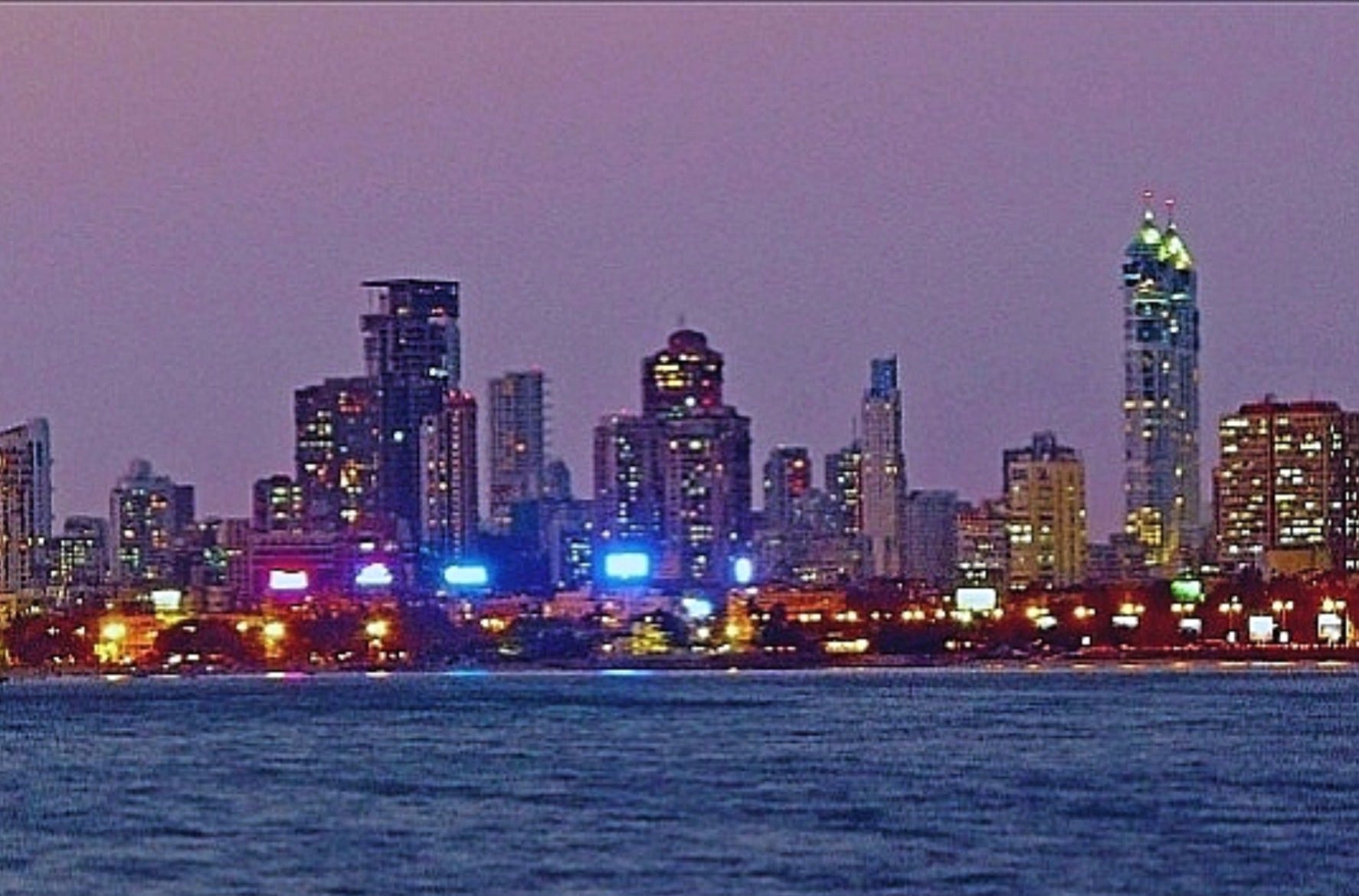
For the purposes of this post, let’s date the beginning of the Colonial Period in Indian history as 1757, following the decisive Battle of Plassey. British Crown rule commenced at that point and continued until 1947. After independence from Britain, the former colony was partitioned into the two nations of India and Pakistan, with India formally becoming a republic in 1950.
As India’s first prime minister, Jawaharlal Nehru played a major role in introducing modern architecture to the country. His invitation to Le Corbusier to plan and design the new city of Chandigarh in northwestern India marked a critical embracing of modern architecture in the post-independence era.
Chandigarh
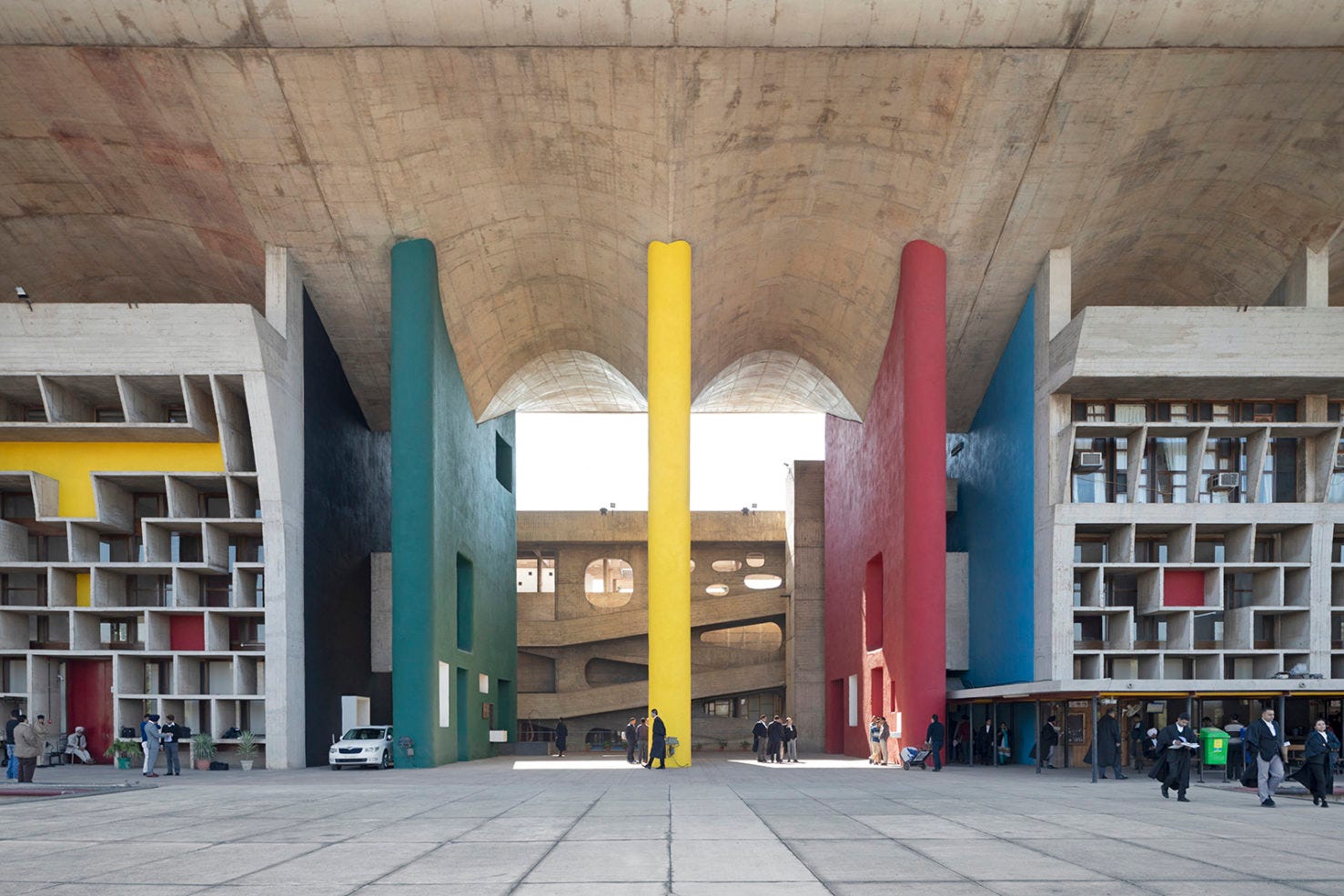
Jawaharlal Nehru’s vision of a planned city for a newly independent India drew on clear historical precedents, notably Pierre L’Enfant’s 1790 plan for Washington, DC, and the 1913 design of Canberra by the American architects Walter Burley Griffin and Marion Mahony Griffin.
Chandigarh was followed by other ambitious purpose-built capitals, including Brasília in 1960 and Abuja, Nigeria, developed during the 1980s.
Rachel May, of the Harvard School of Design, explained:
In 1950, Nehru commissioned Le Corbusier to design Chandigarh, setting in motion the country’s nascent development program and national identity under the era’s premise that…A culture could be determined by its design.


Image credits:
Top left: Palace of Assembly - photo: Lillottama • CC BY-SA 4.0

Top right: Palace of Assembly - photo: duncid
Bottom left: Secretariat - photo: Sanyam Bahga • CC BY-SA 3.0

Bottom right: Punjab and Haryana High Court photo: Sanyam Bah
The Indian digital magazine Scroll offered this somewhat tough critique:
An obvious mistake is Chandigarh’s unnecessarily large scale. In the early days, while senior officials would have had government cars and drivers, many of the clerks, peons and other staff who kept the administrative processes functioning would have commuted by bicycle. Overlooking these realities, the city was built for cars that most of its residents couldn’t yet afford. Today, Chandigarh still feels like it hasn’t been grown into yet: its wide avenues are striking but impersonal, and distances between places are unnecessarily long. Given the number of bicycles in archival photos and bike lanes across the city today, perhaps alternative and cleaner mobility patterns could have emerged if the city wasn’t designed for the automobile.
My long-distance observation is that, given the time period and the Le Corbusier approach, there has to be the requisite amount of Brutalist concrete, leavened by the occasional splashes of color. Writing in the New York Times, Barbara Crossette offered this observation:
Le Corbusier's work here, his largest single project, has been particularly controversial. More fundamentally, his urban vision may have never really been in tune with the soul of India.
The Lotus Temple, Delhi, India 1986
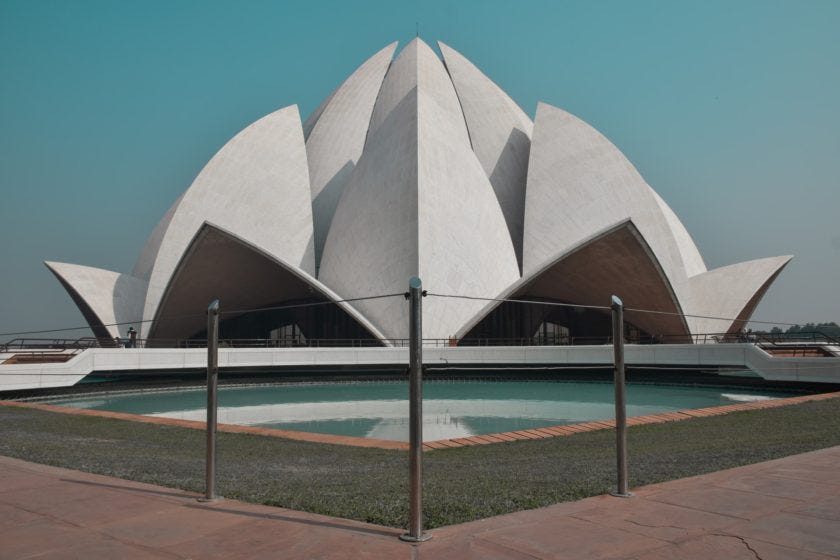
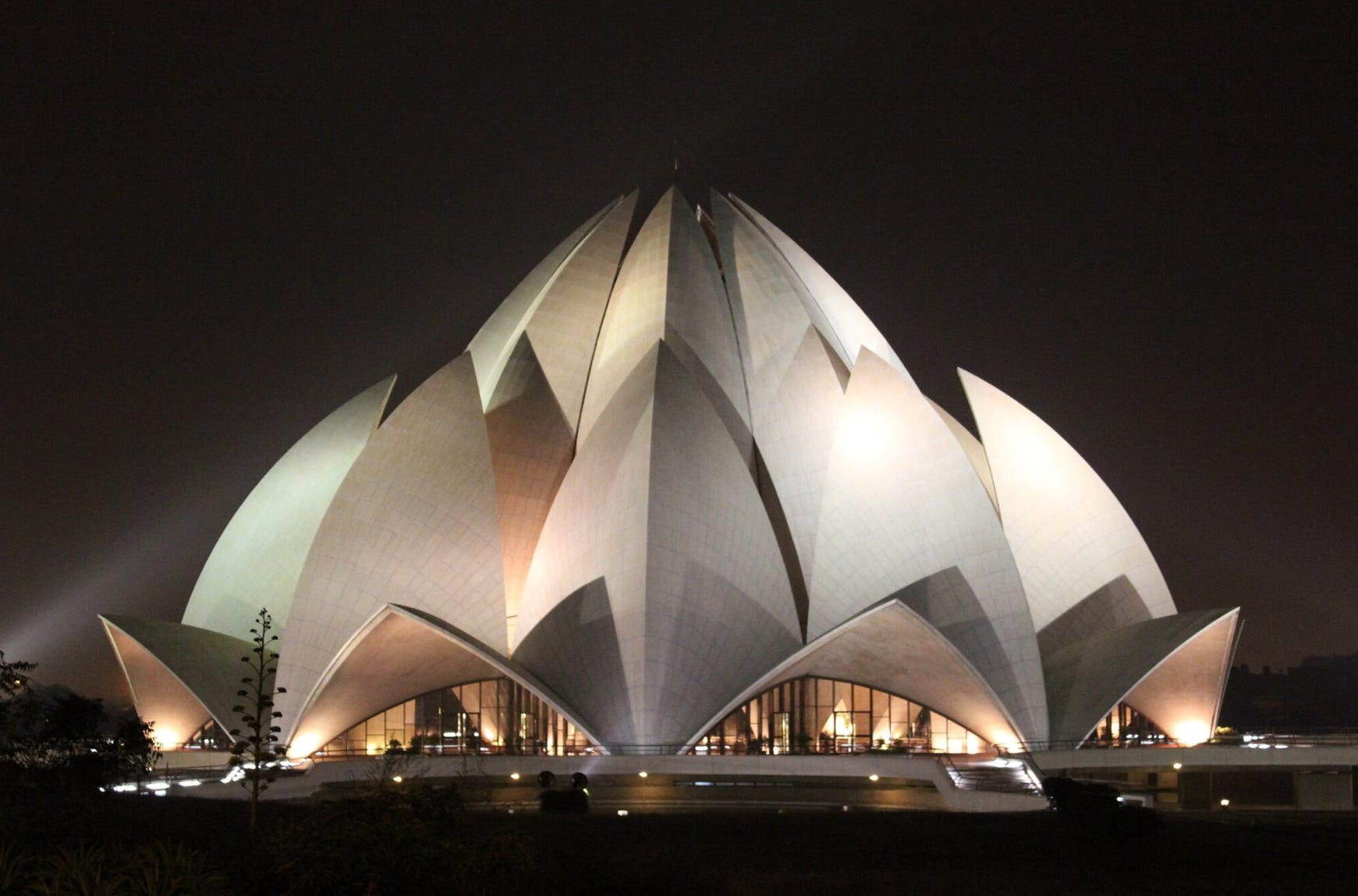
Designed by Iranian and American architect Fariborz Sahba, The Lotus Temple serves as a temple for the Baháʼí Faith. Mr. Sahba reportedly worked on the project for 10 years as both architect and project manager. In researching this post, we discovered this description in Daily Art online magazine:
It’s striking design features 27 large petals, arranged across three levels to form the shape of a lotus flower. The petals are clad in pristine white Greek Pentelic marble, well-known for its durability. These petals are not merely decorative but are integral to the building’s structure, supported by a precise arrangement of concrete ribs that ensure stability. The design beautifully combines form and function, creating a harmonious, awe-inspiring structure.
The Indian Institute of Management, Ahmedabad India
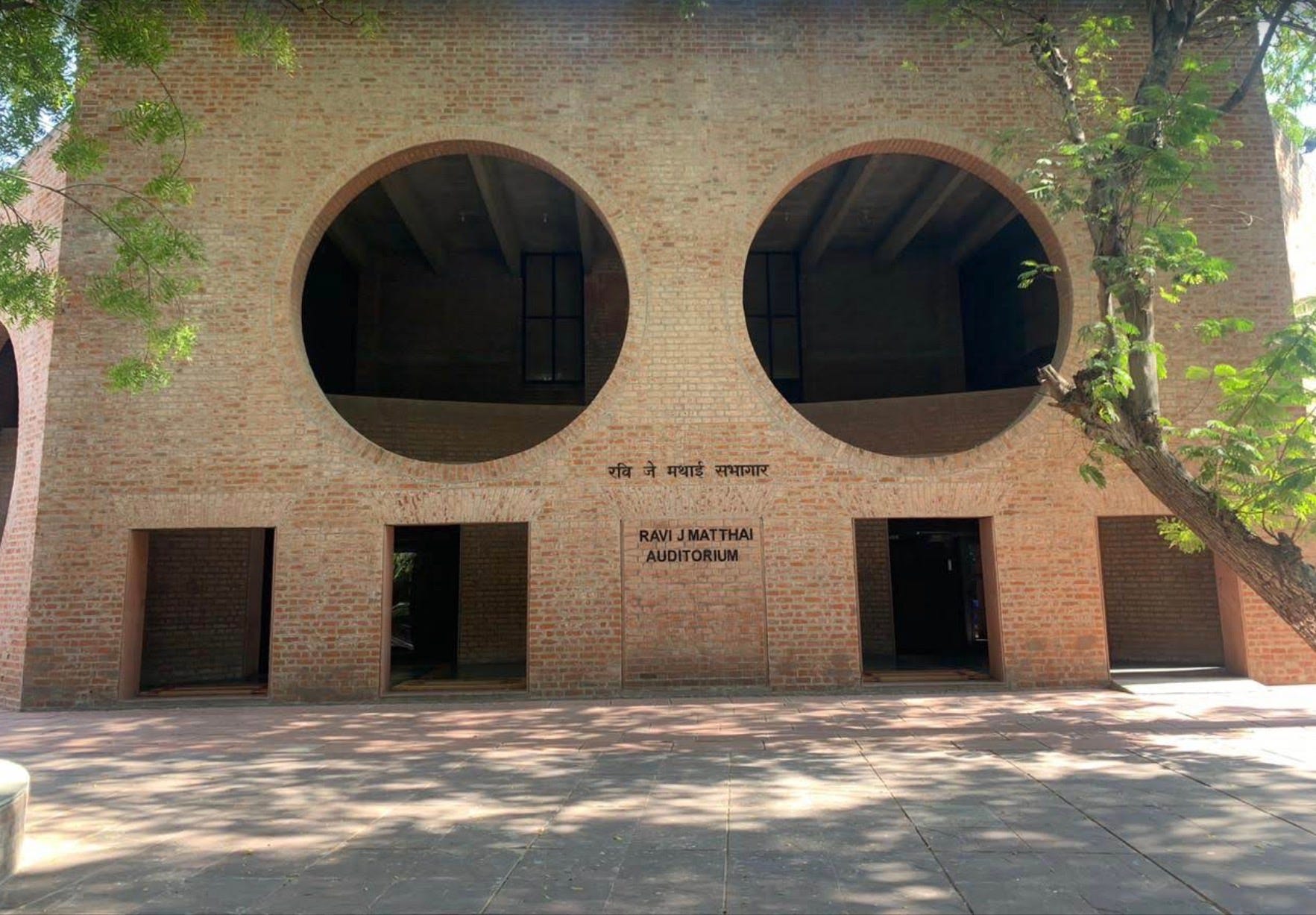
Designed by none other than Louis Kahn, the Indian Institute of Management opened in 1974. Writing in ArchDaily, Andrew Kroll said:
It was [Indian architect] Balkrishna Doshi that believed Louis Kahn would be able to envision a new, modern school for India’s best and brightest. Kahn’s inquisitive and even critical view at the methods of the educational system influenced his design to no longer singularly focus on the classroom as the center of academic thought.
Did anyone ever use brick as elegantly as Louis Kahn?
Lodha World Towers, Mumbai - 2020
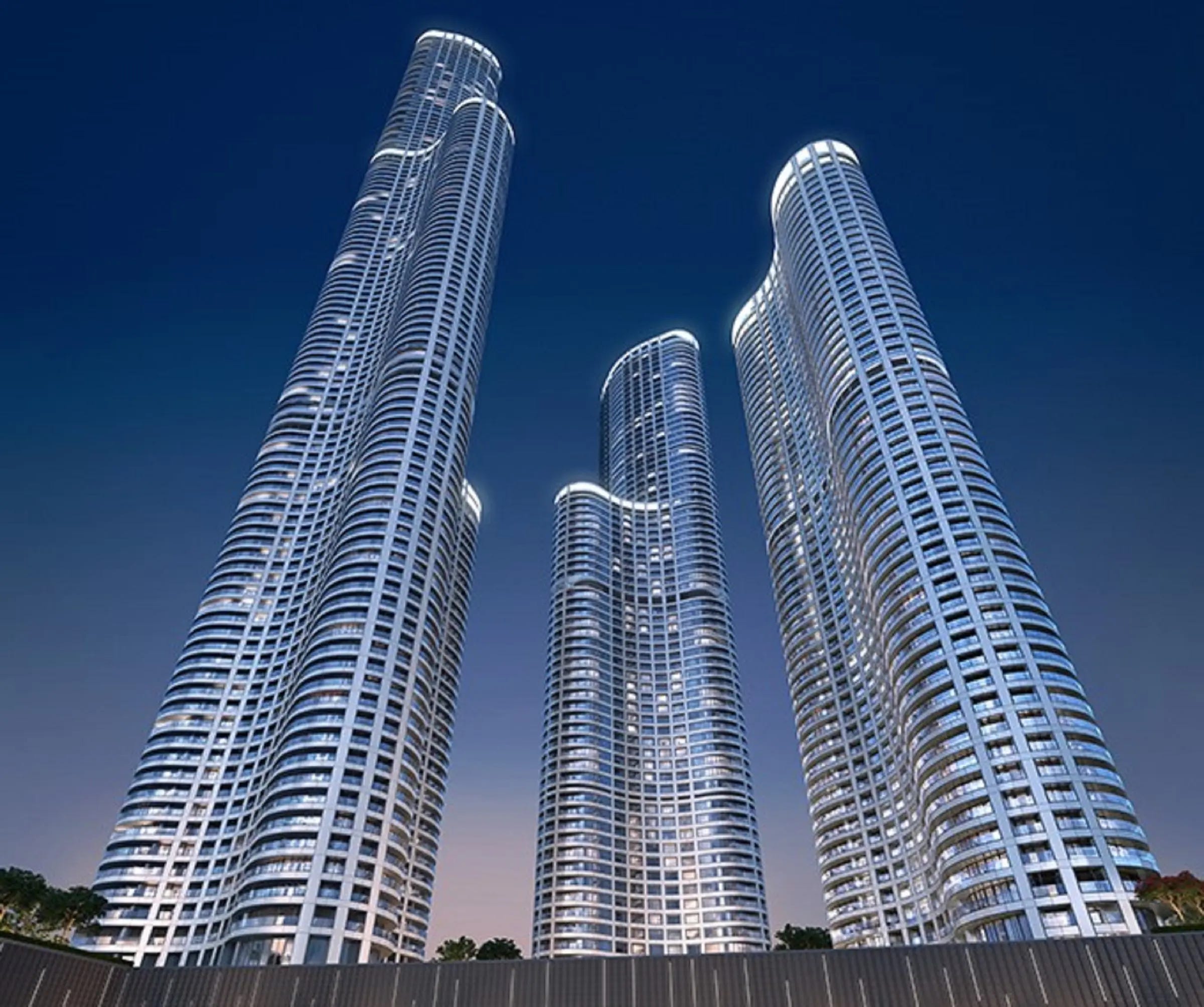
Lodha World Towers, Mumbai - 2020
Designed by Pei Cobb Freed & Partners for the Lodha Group, these towers seem conceived for a skyline in London, New York, or Los Angeles. That observation is not a critique but a compliment. Mumbai clearly positions itself as an emerging global “power city,” and architecture of this caliber reinforces that ambition.
The sweeping curvilinear façade would feel entirely at home in any of those major metropolitan centers. The Indian glass manufacturer FG Glass described the façade this way:
The building's podium and car parking levels up to level 6 are clad with CLIMACOOL PRO-1 units with Saint Gobain KT155 single-silver MSVD coating and an ENAMELITE dual ceramic coating in two gray shades to either completely opacify the glass or provide a shading effect in a linear pattern
Egg Building, Mumbai
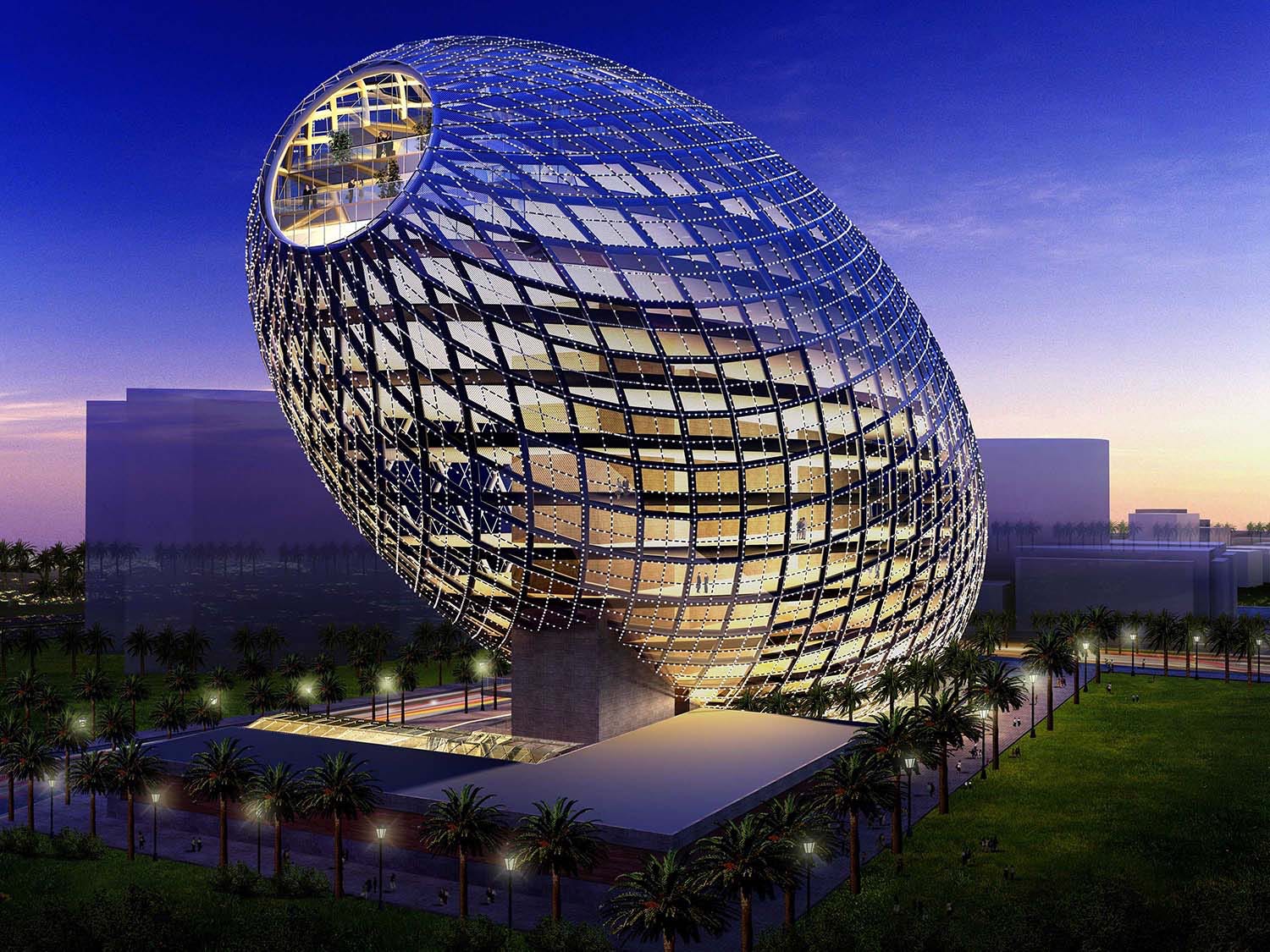
The unique skeleton of the Egg Building in Mumbai is described by www.worldarchitecture.org below:
The structure of the Cybertecture egg uses a diagrid exo-skeleton (made of cast steel nodes of solid steel to create fire resistant structure), due to which it becomes a stiff structural system providing large floor plates without any columns, resulting in the reduction of construction material usage to approximately 15% in comparison to usual buildings
Infosys Pune Campus
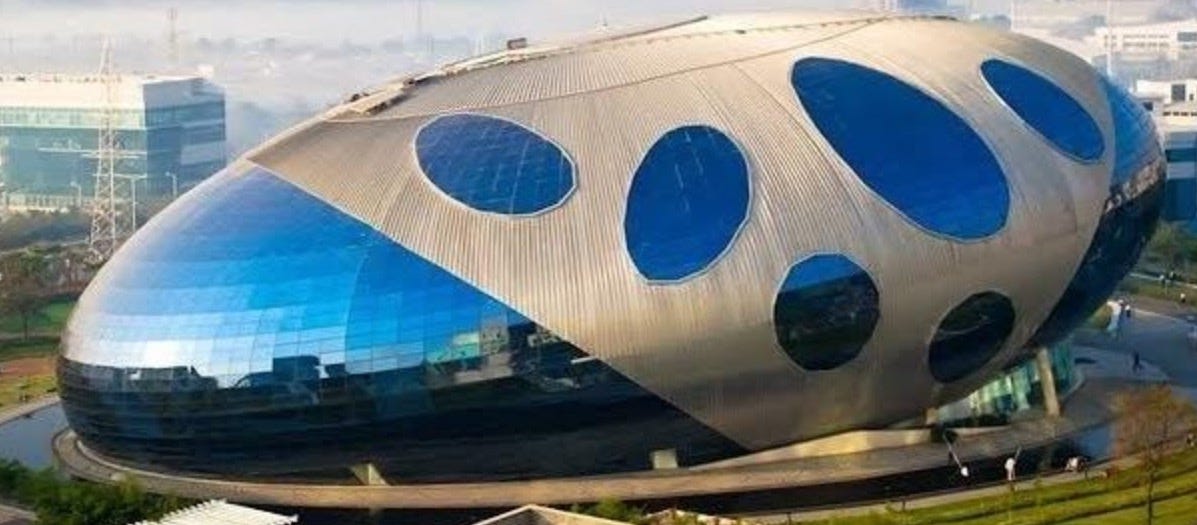
Designed by renowned Indian architect Hafeez Sorab Contractor for the Infosys Limited campus in Pune. The remarkably interesting website, www.re-thinkingthefuture.com, said this about the “Spaceship” building:
Infosys Limited, Pune, stands as a triumph in corporate architecture, a testament to Hafeez Contractor’s mastery in crafting innovative and functional workspaces.
Jawahar Kala Kendra, Jaipur -1986
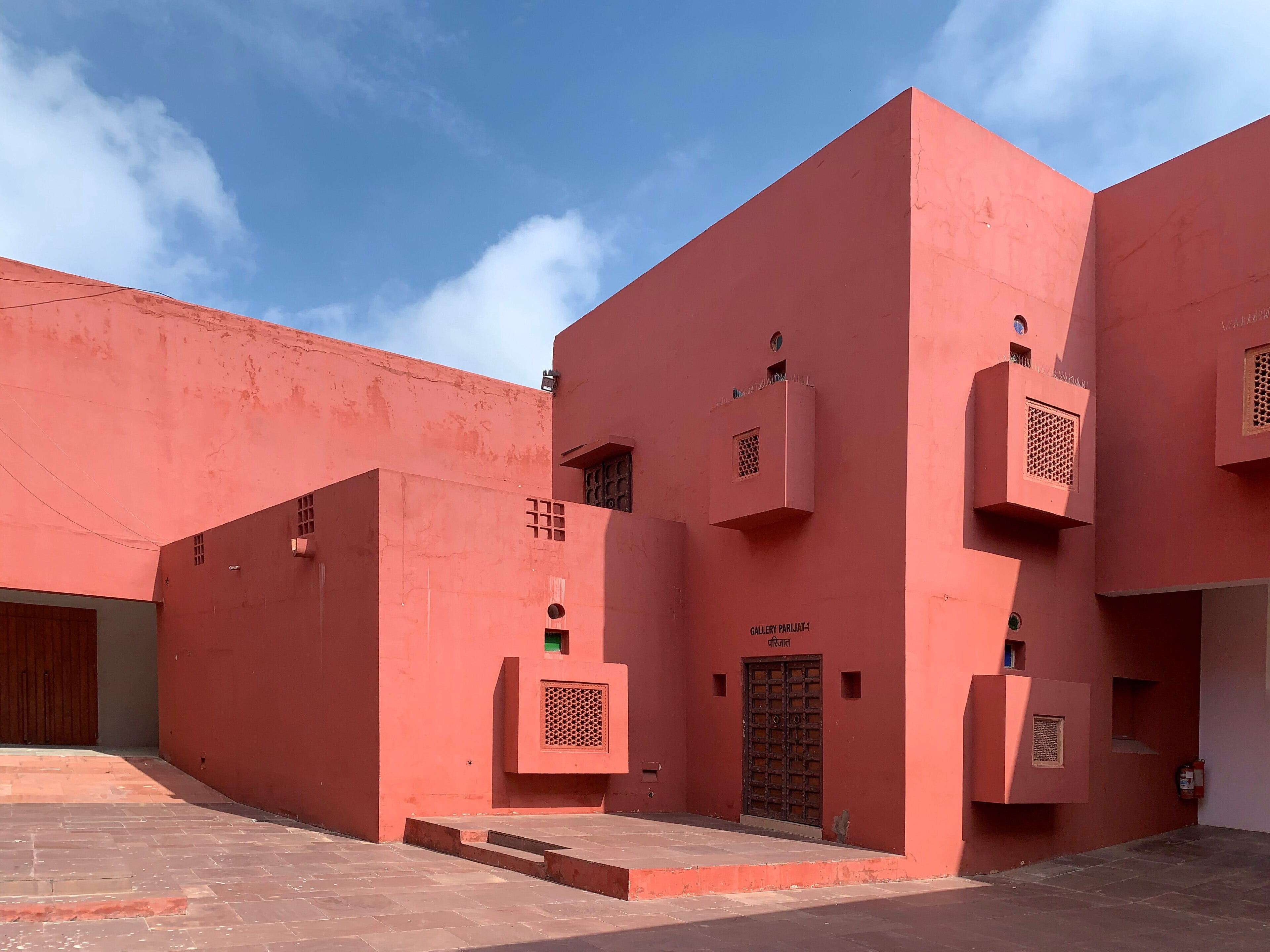
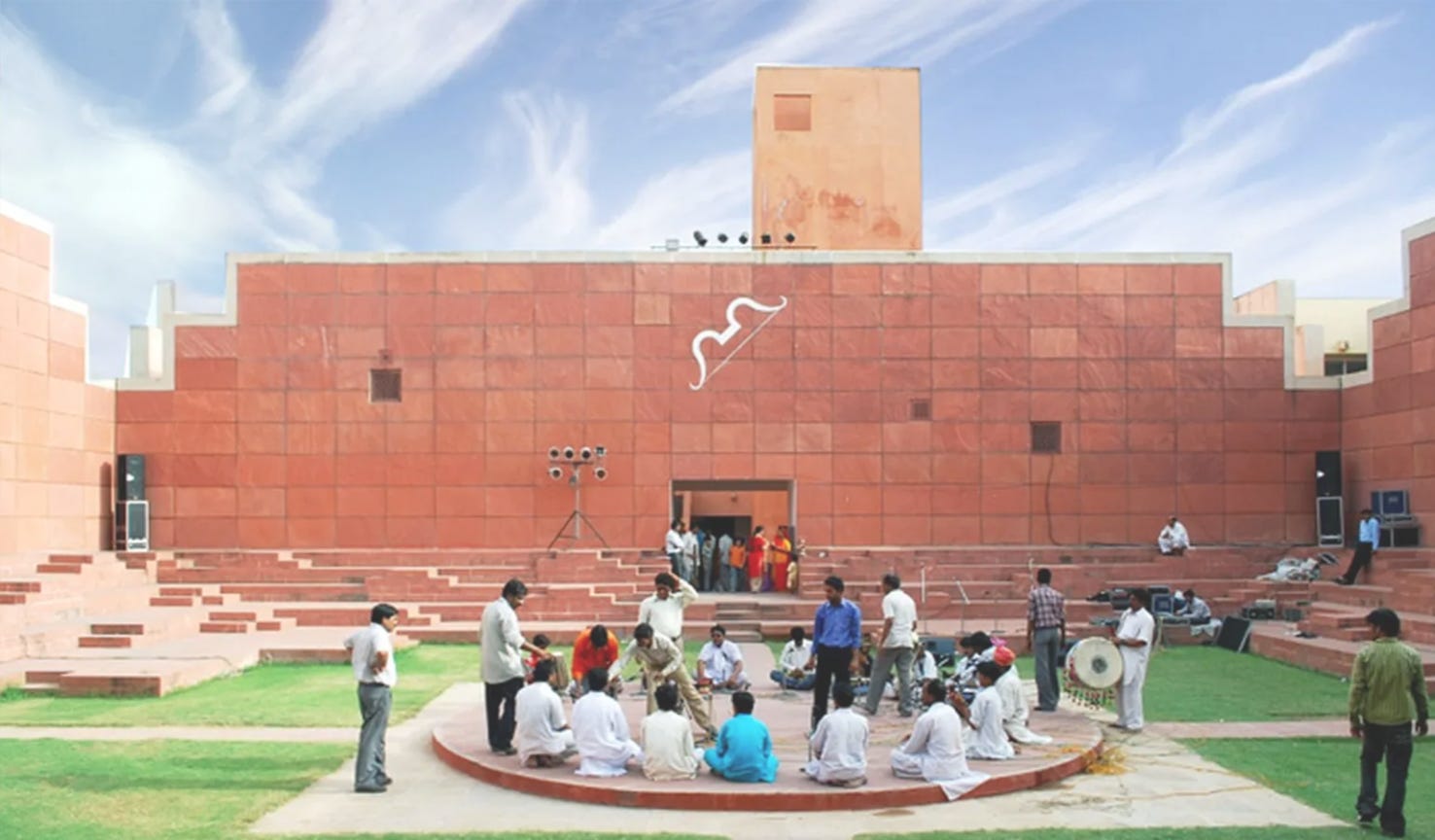
Designed by one of modern India’s most esteemed architects, Charles Correa, in 1986 but opened in 1992, this project was originally programmed as a multi-arts center and is said to follow concepts from ancient architectural principles called the Vastu Vidya. Turkish architect Sümeyye Okumus wrote:
Blending India’s cultural and climatic conditions with modern architecture, Charles Correa argued that buildings are not just physical structures, but also spaces that shape the relationship between people and the environment.
Conclusion
Admittedly, I have never been to India, so why write about Indian architecture? The answer is fairly straightforward. First, India has recently surpassed China as the most populous country on earth. Second, as a relatively young nation in terms of its modern political form, it is fascinating to consider what may emerge on the nation’s architectural canvas. I think the world architectural community should look forward to the developments in modern Indian architecture.
In the meantime, stand by for a post on modern Indian residential architecture
Architecture for the Soul is a reader-supported publication. Please consider becoming a paid supporter. WE NEED YOUR HELP!