
Richard Rogers
Inside Out Designs


Richard Rogers was born in Florence in 1933, where his father was studying medicine. The family left Italy in 1938, relocating to London to escape the regime of Benito Mussolini.
In England, Rogers struggled academically as an undiagnosed dyslexic. Despite these early difficulties, he went on to earn a diploma from the Architectural Association School of Architecture before later completing a master’s degree at Yale University. While at Yale, he met his future wife, Su Brumwell, and his future architectural partner, Norman Foster.
The Centre Pompidou, Paris -1977
The 1960s proved to be a turbulent period for Paris and for France in general. After years of postwar leadership under Charles de Gaulle, the political climate was beginning to shift. Students were increasingly restless, and many workers shared their frustrations.
Pent-up tensions erupted in the May 1968 protests in France, and student demonstrations were soon followed by a massive general strike that effectively brought the French economy to a standstill. Although the movement failed to achieve many of its specific aims, it nonetheless shook the nation.
In 1969, Charles de Gaulle resigned from office and was succeeded by his prime minister, Georges Pompidou. While Pompidou largely continued the Gaullist political framework, he introduced a fresher, more modern approach to governance.
Early in his Presidency, Pompidou decided to go forward with a cultural center to be located in an area of Paris formerly occupied by the Les Halles food markets. This ultimately put into motion a design competition that drew approximately 681 entries. In 1971, the joint venture design of Richard Rogers and Renzo Piano was announced as the winner.
At some point in the late 80s, I was in Paris with a colleague for a meeting that was repeatedly rescheduled, leaving us with quite a bit of time on our hands. This is obviously not the worst thing in the world, and during that time we took a serious look at the Pompidou Center.
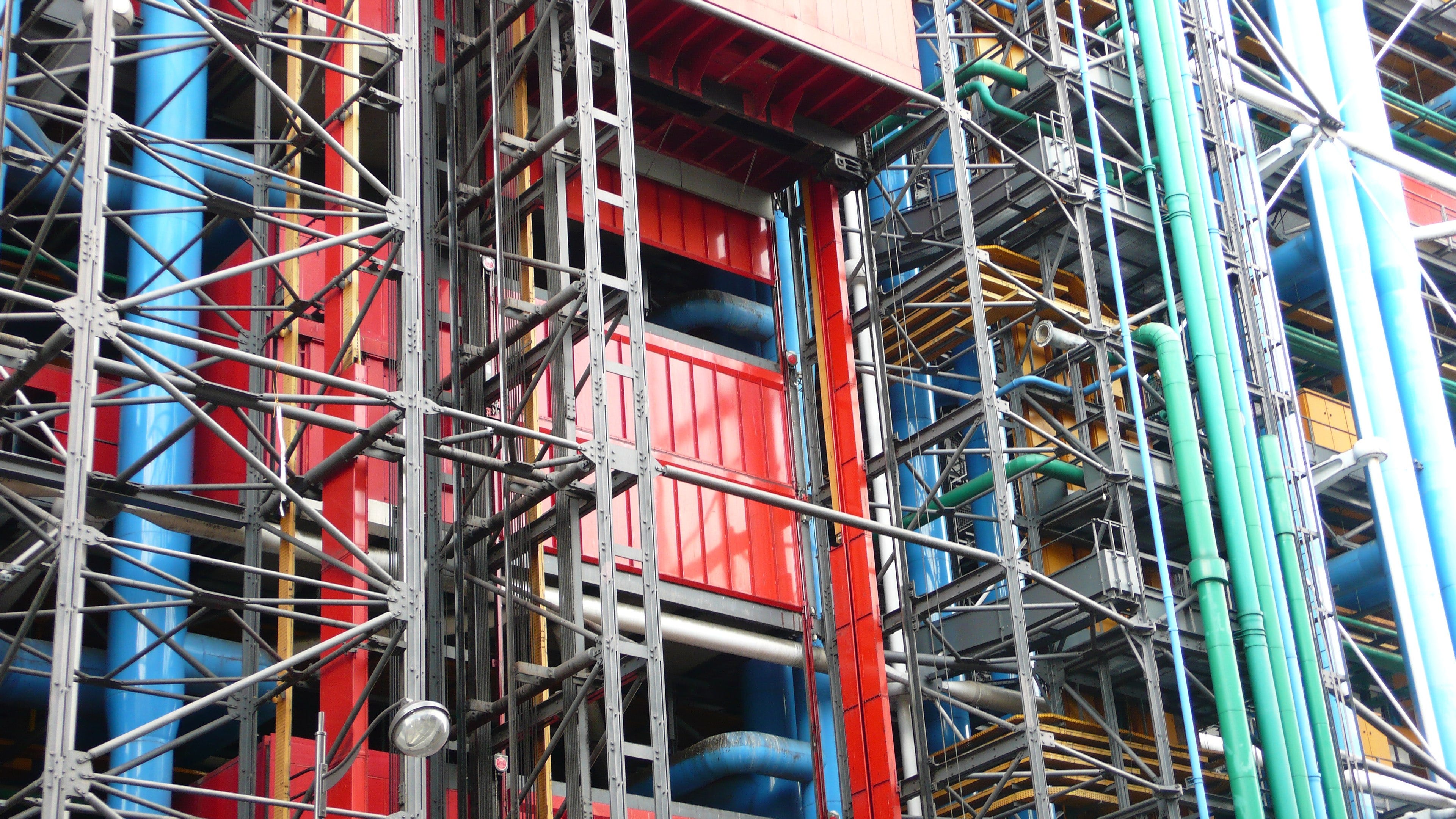
Having previously seen imagery of the building, I should not have been shocked when seeing it in person. But startled I was. The functional elements on the outside of the building gave it an industrial feel, somewhat softened by the dramatic color coding. All leading to the question, “What the heck is going on here?”
In fairness, we should have known what the color-coded exposed elements meant, but sadly, we did not at the time. Later, we learned that green = plumbing, blue ducts = climate control, yellow = electrical wiring, and red = circulation elements and safety devices. Renzo Piano’s firm, in perhaps a moment of self-aware acknowledgement had this to say:
The Center is like a huge spaceship made of glass, steel and colored tubing that landed unexpectedly in the heart of Paris, and where it would very quickly set deep roots.” — Renzo Piano’s firm.
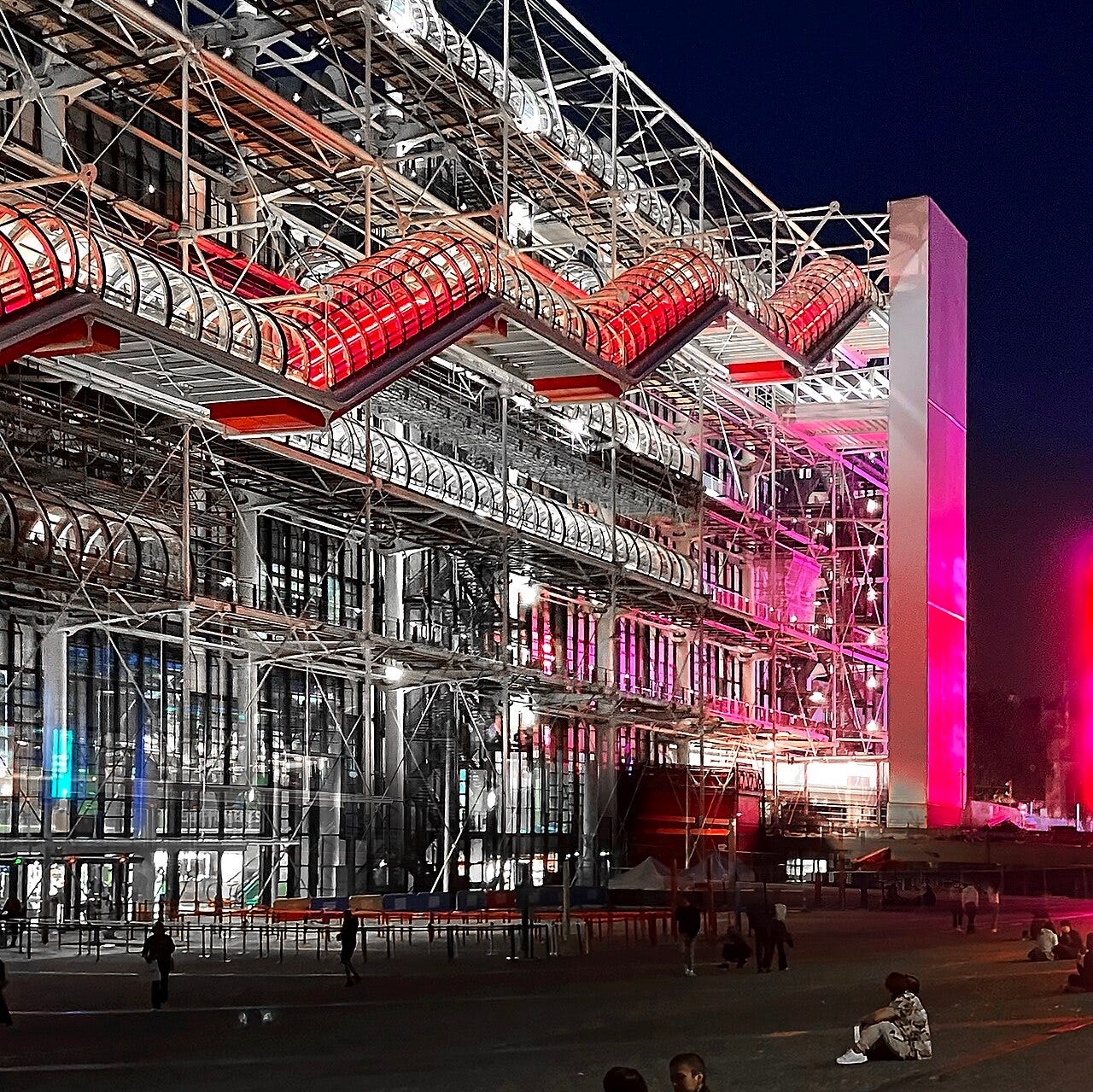
The Center closed for renovation in September of 2025 with a scheduled reopening in 2030. All these years later, for better or for worse, this Rogers- Piano effort lingers as a masterpiece in my memory.
Lloyd’s of London, London - 1986
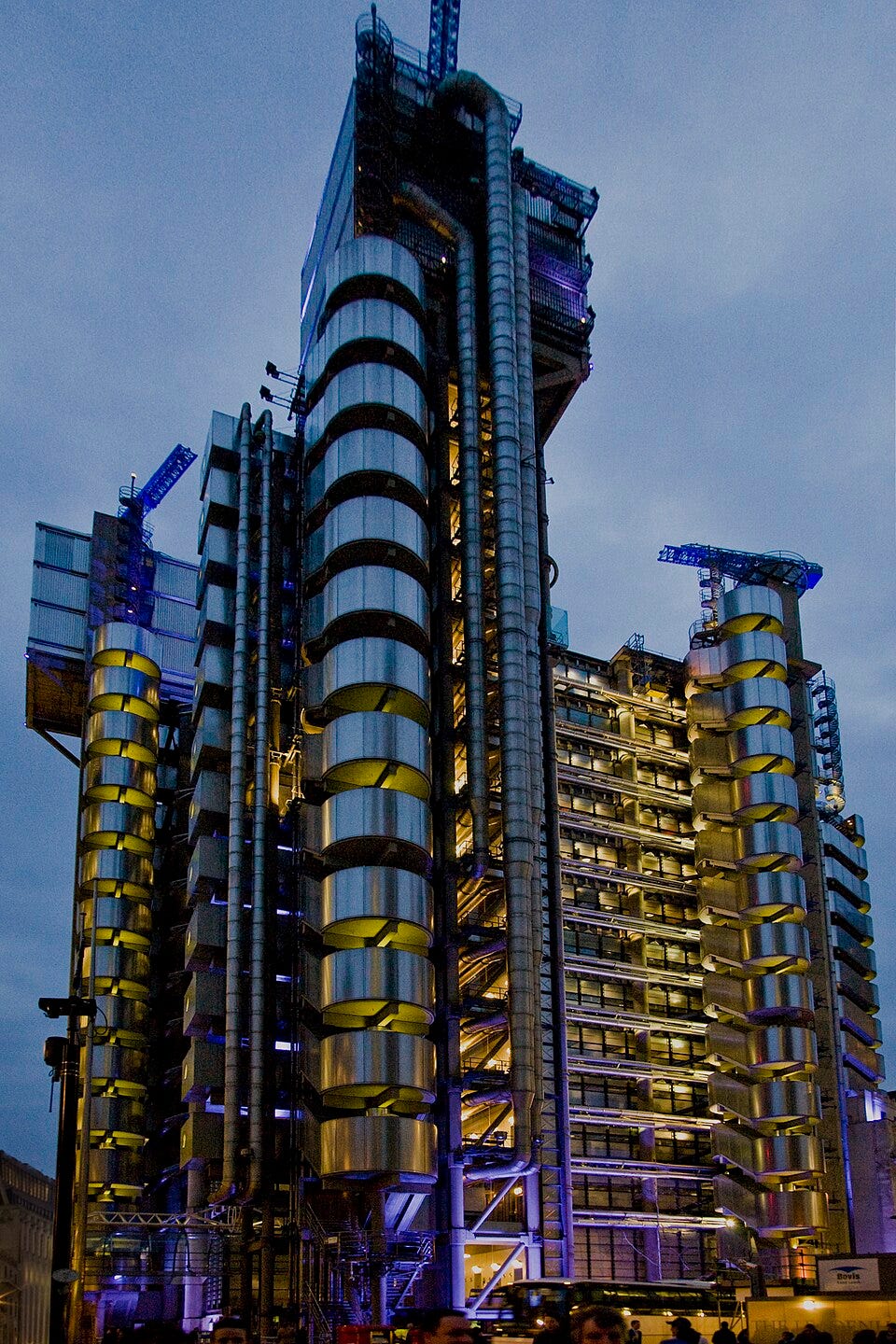
Another example of Rogers creating an inside-out building in which the “guts” of the structure, such as pipes, ductwork, stairs, and elevators, are exposed externally, leading to the style being referred to as “Bowellism.” No more on that choice of words.
The current surviving firm, Rogers Architects, said this:
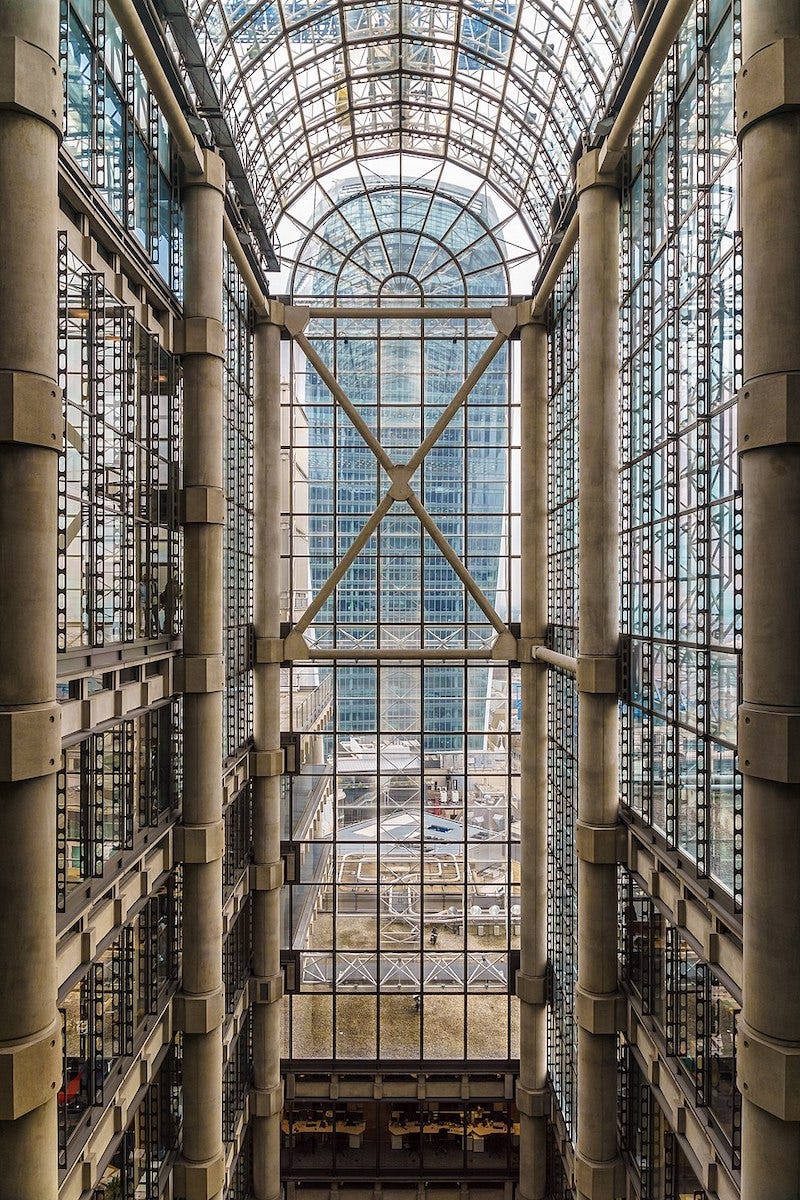
Similar to Centre Pompidou the Lloyd’s building is designed “inside out.” All of the service functions are removed from the interior and placed at the exterior of the building. This not only allows for easy replacement and maintenance on the elevators, plumbing, or electrical facilities, but it frees up the interior to create an open and flexible plan that allows for uninterrupted activity on each level.
But then Richard Rogers said in his 2017 memoir:
The Lloyd’s Building was designed as a flexible machine for a financial marketplace,” says Rogers, “but also as a carefully considered expression of those activities
While the former Prince of Wales, now King Charles III, is not known to have specifically denounced the Lloyds tower, it must have fallen into a basket of buildings that, collectively, would eventually draw his Royal ire.
The Millennium Dome (the O2 Arena), London -1999
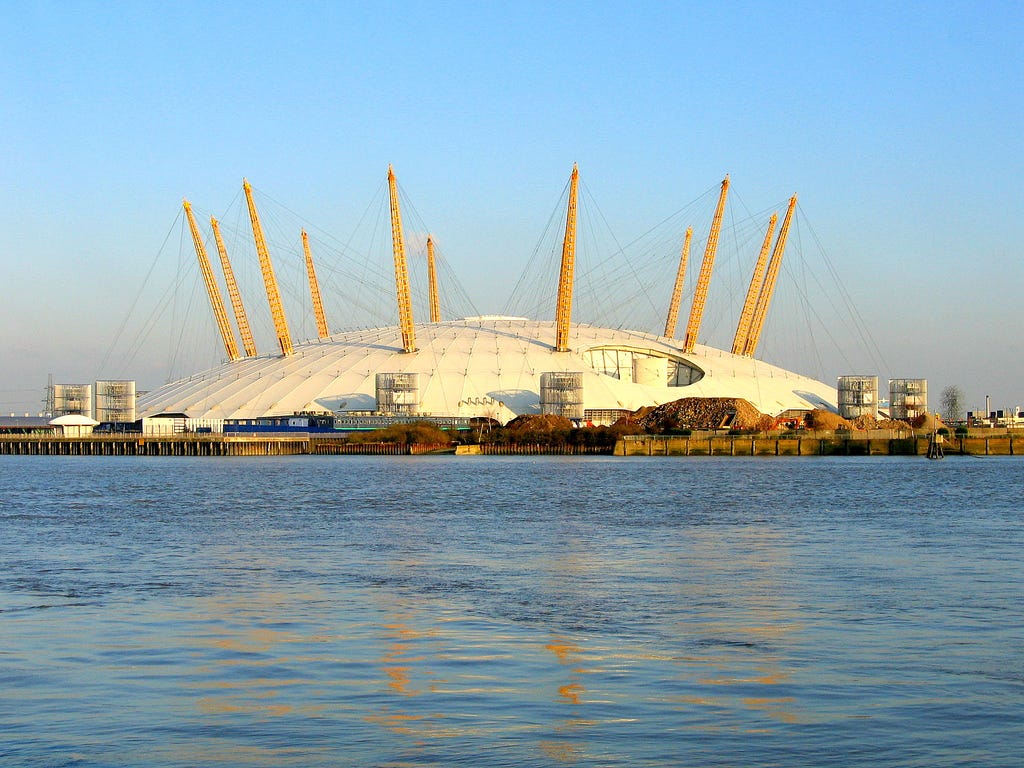
Designed and built to grandly celebrate the entry of Great Britain into the 21st century, while highlighting “Cool Brittania” with a spectacular opening including the Queen and a vast array of “A-listers.” Then Prime Minister, Tony Blair, declared that the dome would be “a triumph of confidence over cynicism, boldness over blandness, excellence over mediocrity.”
Here also began the year-long “Millennium Experience,” which was expected to draw millions of visitors and produce bazillions in revenue. The event did not meet expectations for either attendance or revenue. In hindsight, those expectations now seem unrealistically exuberant.
The relatively unsuccessful “Milennium Experience” caused the Dome to lose both business and political momentum. However, since it’s rebirth as The 02, it has become one of the most successful entertainment and cultural venues in the world.
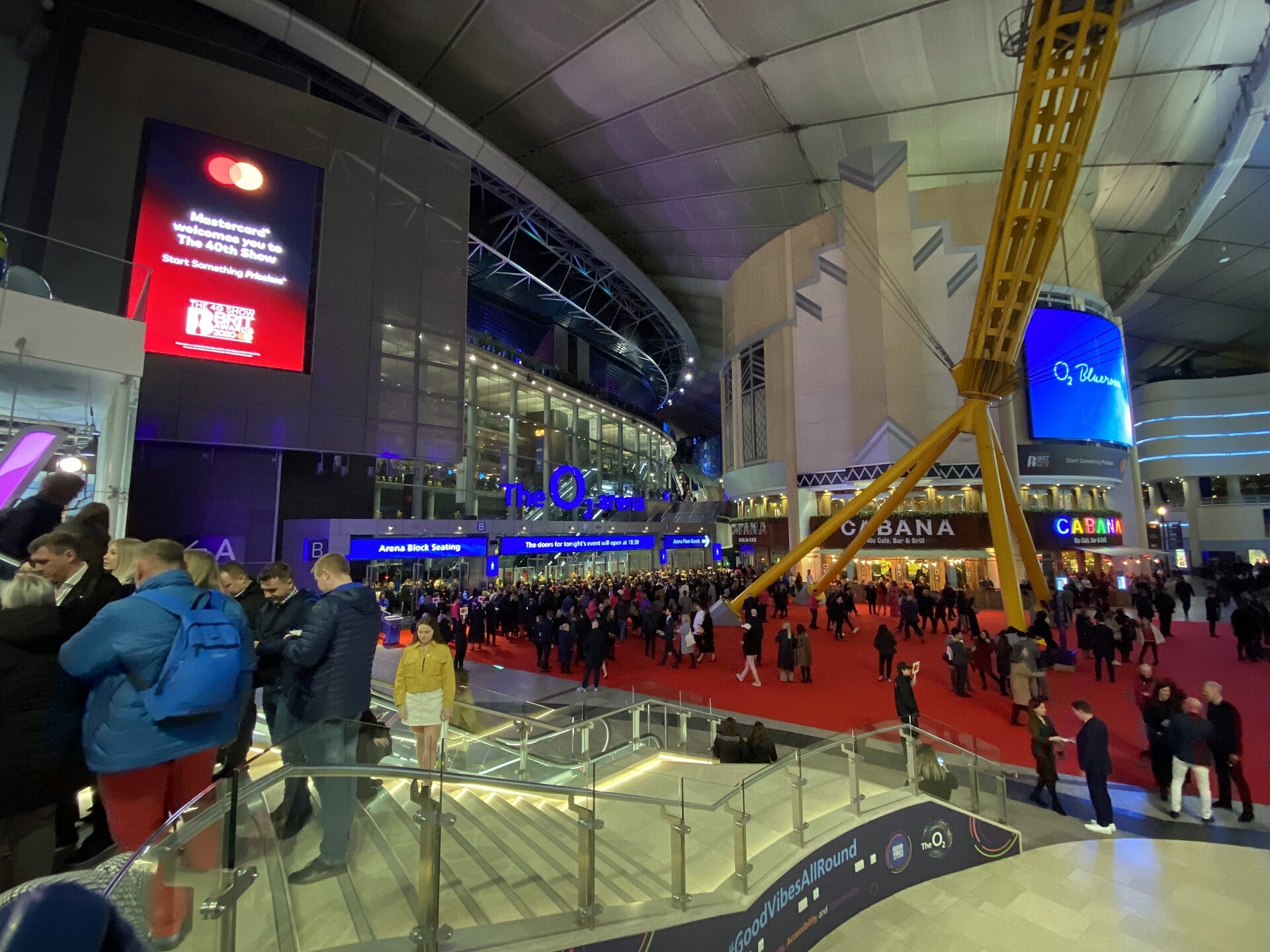
Richard Rogers and his team designed a great deal of symbolism into The Dome that speaks to its location on the Greenwich Peninsula, and what that means for Greenwich Mean Time and world navigation. For example, the Dome is 365 meters in diameter, aligned with the number of days in a typical year. There are 12 supporting towers corresponding to months and/or hours. The Dome is 52 meters high at its apex, or one for each week.
**** [Click here for a refresher course on GMT and Greenwich as the Prime meridian (0 degrees Longitude).]
Despite the initial fits and starts, today, the O2 arena ranks as one of the most attended entertainment venues in the world, keeping company with The Sphere in Las Vegas and Madison Square Garden in New York. That said, The unique vision of Richard Rogers gave this project the room it needed to adapt to changing times and programming.
Terminal 4, Barajas Airport, Madrid - 2005
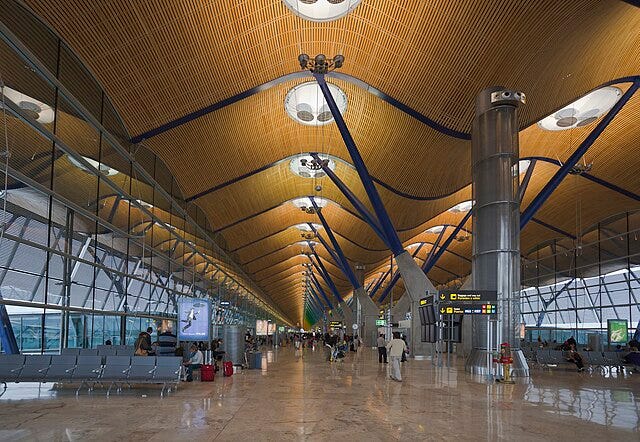
Assuming the types of commissions an architect will receive reflect the needs of society is no surprise. Hence, so many of the A-list architects in the 20th and 21st century I’ve been involved in designing or redesigning airports.
And so it was when a design competition for a new terminal at the Madrid-Barajas airport was launched in 1997. The goal was to elevate the Madrid airport to the standard of the other major European international airports. The Richard Rogers firm, then known as Richard Rogers Partnership – was awarded the project along with the Spanish architectural office Estudio Lamela.
Jon Astbury, assistant curator in architecture and design at the Barbican, said this about the result of the Rogers and colleagues design product:
The vast terminal – one of the largest in Europe – represented a high-point in airport design, during which the typology became synonymous with the predominantly British style of high-tech architecture.
With its undulating, bamboo-lined roofs, generous skylights and brightly coloured columns, Madrid-Barajas Terminal 4 achieved the rare feat of humanising the airport terminal, a space more often associated with anonymity, homogeneity and general unpleasantness.
The Leadenhall Building ("The Cheesegrater"), (London - 2014
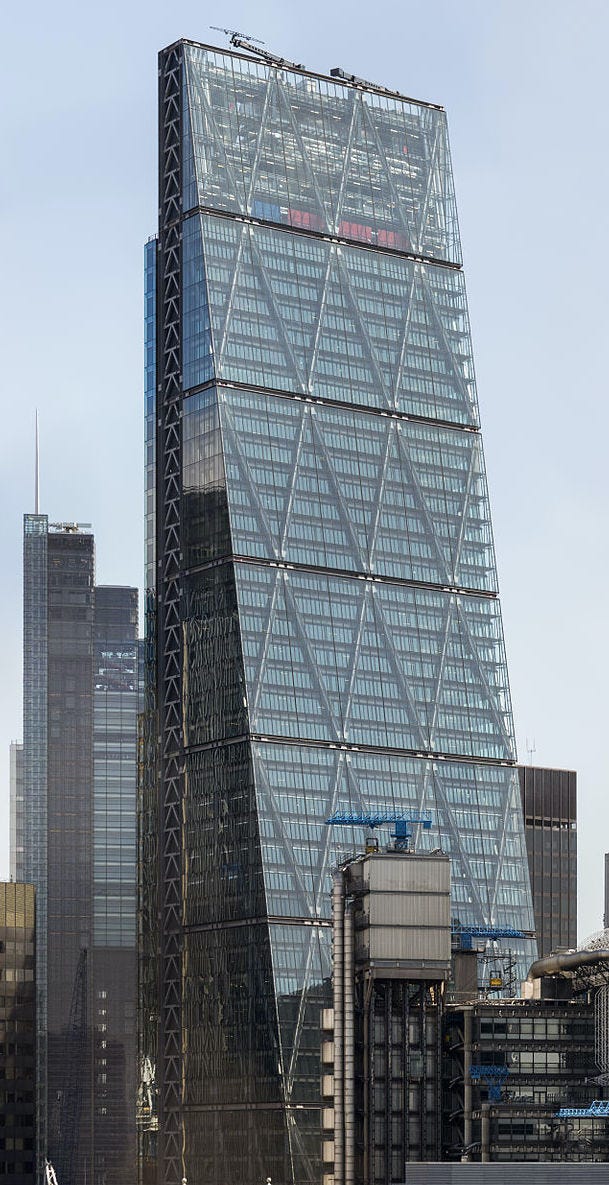
The Leadenhall Building or Leadenhall Tower has also had the rarer “honor” of developing a third name, since it is also colloquially known as the “Cheesegrater” due to its unique shape. This intriguing building opened in July 2014 having been designed by Rogers’s firm Rogers Stirk Harbour + Partners. The nickname derives from the wedge shape similar to the ubiquitous the kitchen device .
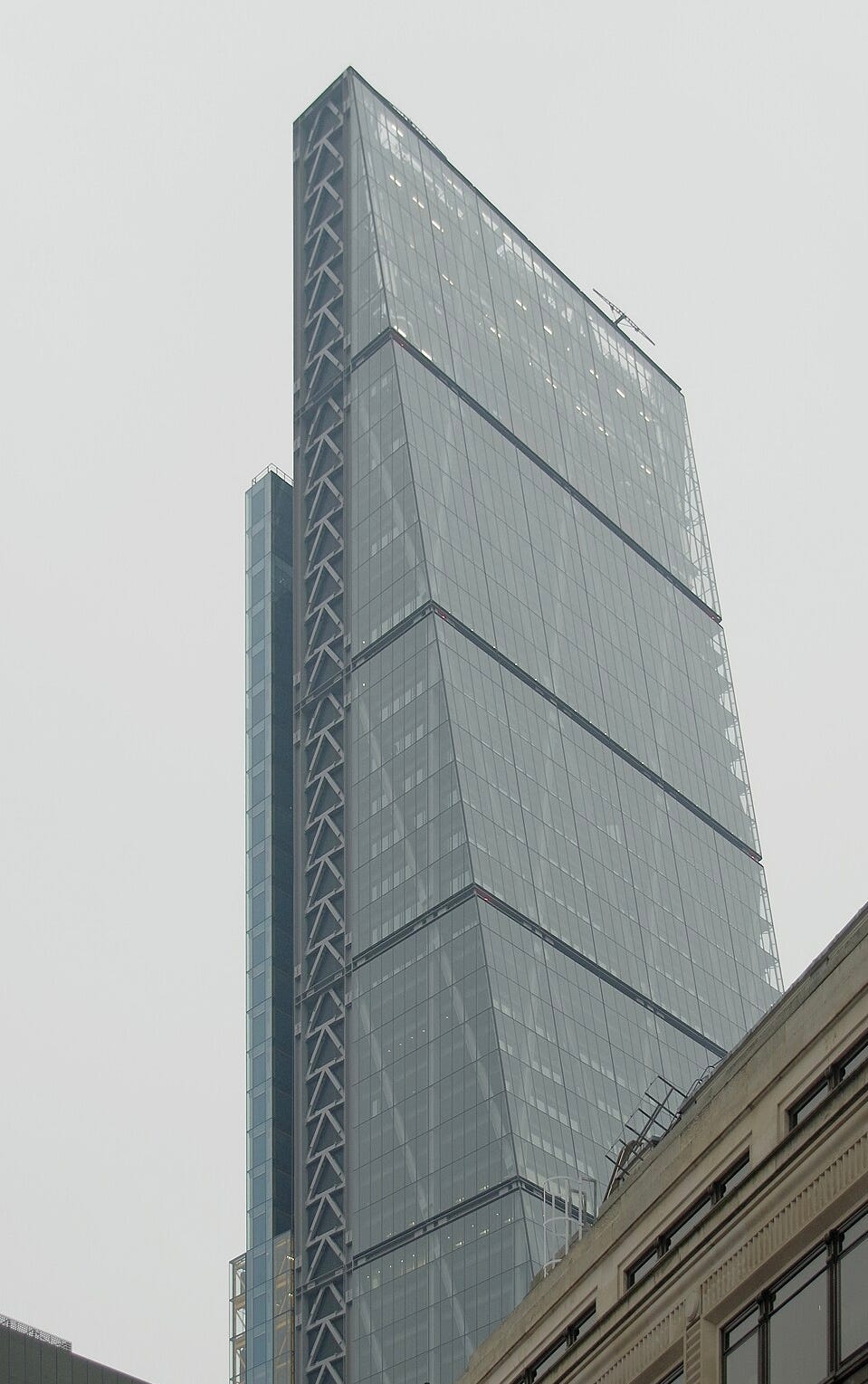
The structure’s tapered profile is a result of the requirement that views of St Paul’s Cathedral, especially from Fleet Street, be strictly preserved. This rather rare shape ensures that mandate. Rogers explained how site requirements, as in this case, could be creatively dealt with:
One of the arts of architecture is to use constraints, turn them upside down and see whether they can help you to design the building
The Prince of Wales and Modern London Architecture
While still the Prince of Wales, King Charles III was quite critical of modern architecture. He famously called a proposed addition to London’s National Gallery, “A monstrous carbuncle on the face of a much-loved and elegant friend.”
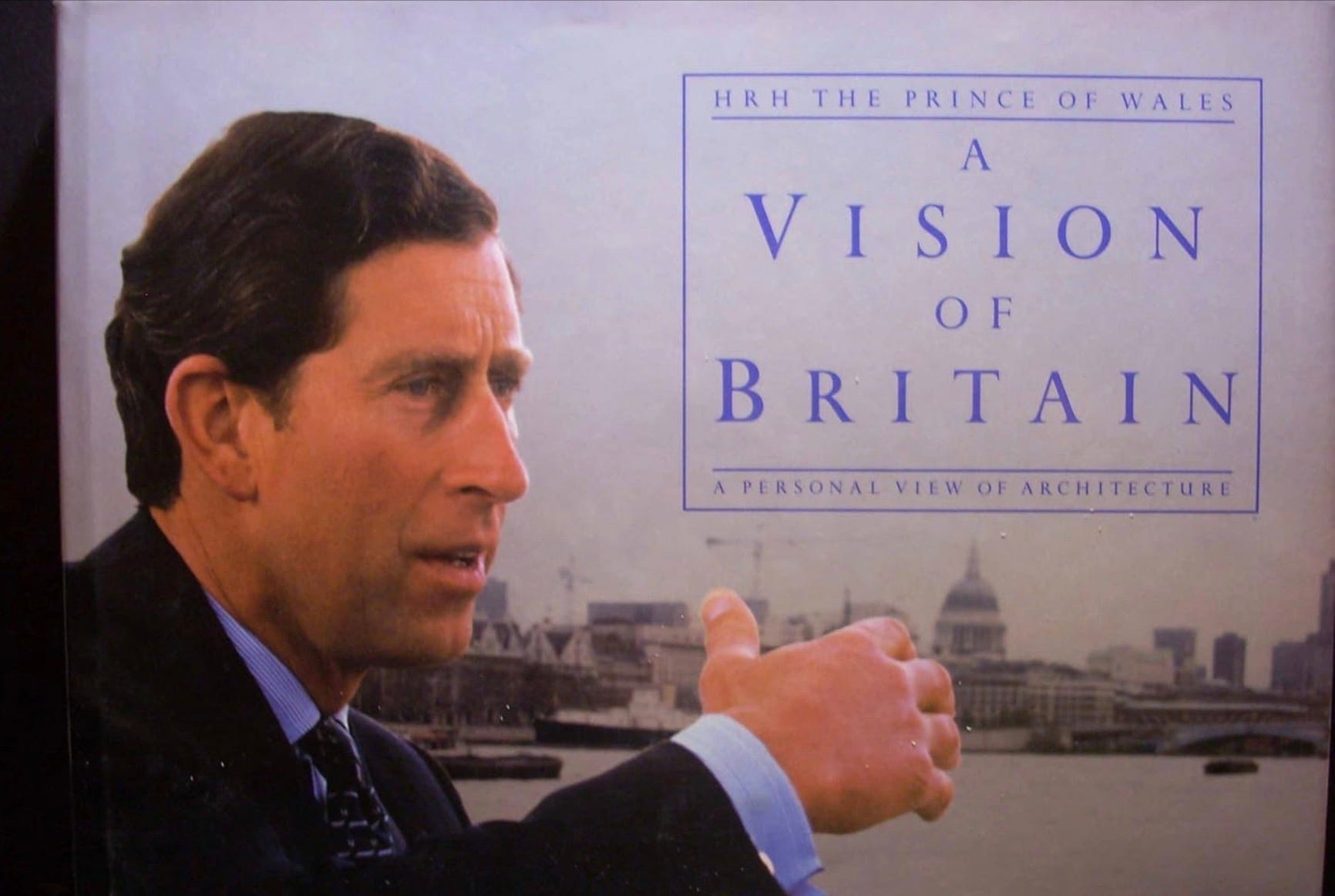
He also taunted his audience during an address to the Royal Institute of British Architects, accusing them of “ignoring the feelings and wishes of the mass of ordinary people in this country.” The Prince declared Birmingham’s city center “a monstrous concrete maze,” with a library that resembled “a place where books are incinerated, not kept.”
The Guardian reported in June of 2009:
The Qatari royal family has scrapped Richard Rogers’ modernist plans for the £1bn redevelopment of Chelsea Barracks in west London following vehement opposition from the Prince of Wales. The investment arm of the Gulf emirate which owns the prime site on the edge of Belgravia today announced that new architects will be brought in and Rogers’ scheme for 548 apartments, half of them affordable, spread over 14 glass and steel buildings will be consigned to history.
Since ascending the throne as Charles III, His Royal Highness has maintained a lower profile in terms of architectural criticism. Between the general demands placed upon a monarch, his own health issues, and the scandals surrounding his brother Andrew, his attention must certainly be directed away from architectural reviews. Richard Rogers passed on in 2021. The fates of King Charles, the former Prince Andrew, and the English Monarchy are still to be determined.
Architecture for the Soul is a reader-supported publication. Please consider becoming a paid supporter. WE NEED YOUR HELP!