
Tour Triangle in Paris
Will Paris accept it?

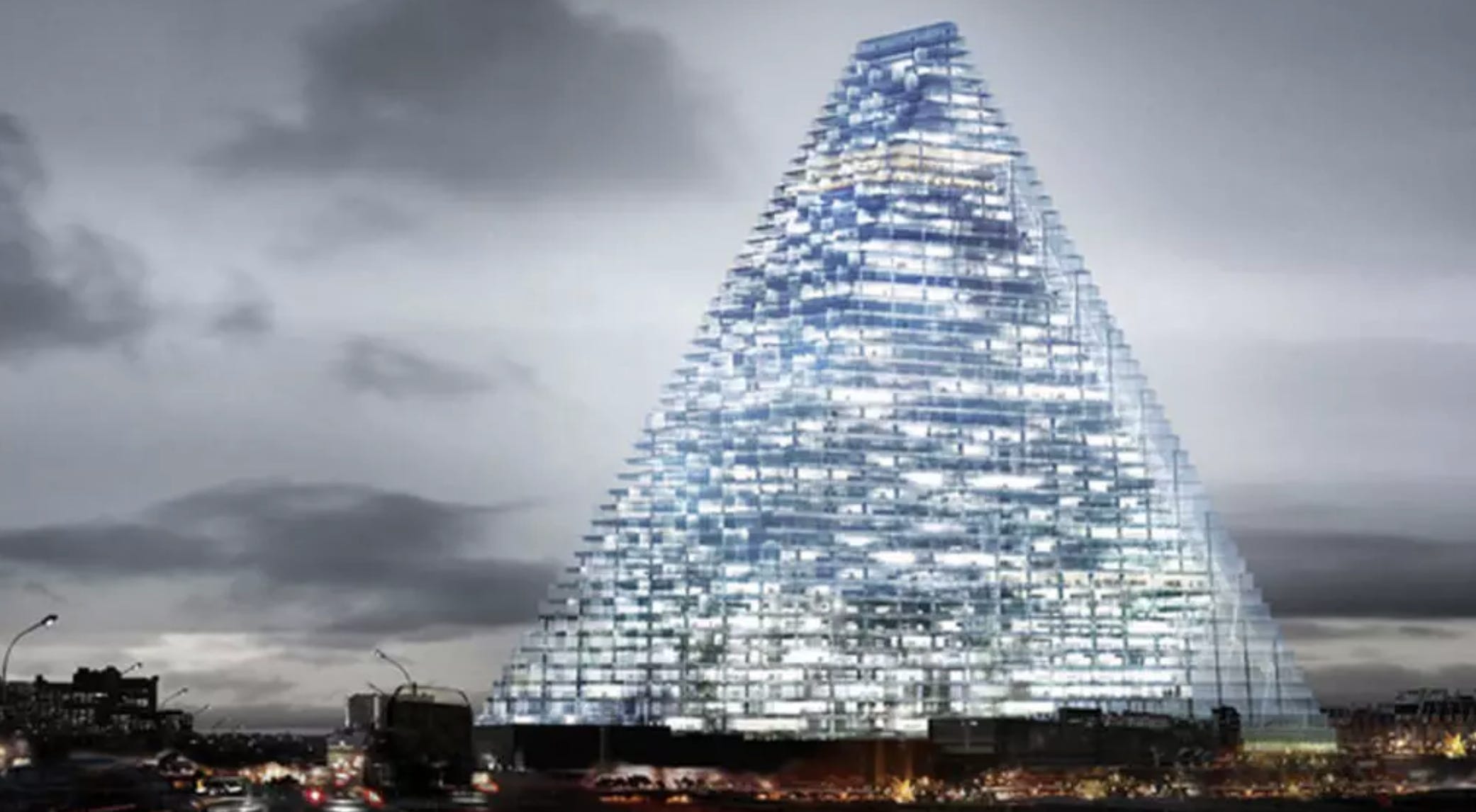
Paris and Parisians have the interesting distinction of having “hated on” both the Eiffel Tower and the I.M. Pei Louvre pyramid. In keeping with such a resume, this project was first proposed in 2010. However, due to both public and legal opposition, construction did not commence until late 2021.
After an international competition, The Swiss firm, Herzog & de Meuron, was chosen to design the building. According to the firm’s 2001 Pritzker Prize citation:
Herzog & de Meuron Architekten is a Swiss architecture firm, founded and headquartered in Basel, Switzerland in 1978. The careers of founders and senior partners Jacques Herzog (born 1950), and Pierre de Meuron (born 1950), closely paralleled one another, with both attending the Swiss Federal Institute of Technology (ETH) in Zürich. They are perhaps best known for their conversion of the giant Bankside Power Station in London to the new home of the Tate Museum of Modern Art (2000). Jacques Herzog and Pierre de Meuron have been visiting professors at the Harvard University Graduate School of Design since 1994 and professors at ETH Zürich since 1999.
The weight of responsibility on the architects must have been considerable. After all, designing a skyscraper in one of the world’s most skyscraper-averse cities is no small undertaking. There were undoubtedly more than a few anxious moments along the way.
In an ironic twist, given the fierce opposition that preceded construction, the Tour Triangle now stands as the third-tallest building in Paris and is likely to retain that distinction for years to come. Former Paris mayor Anne Hidalgo, who played a key role in securing approval for the project, also guided the reinstatement of the citywide building height limits through the Paris City Council. As a result, the Tour Triangle is effectively assured of remaining on the city’s architectural “medal stand” of height for the foreseeable future.
The”faces” of the Tour Triangle
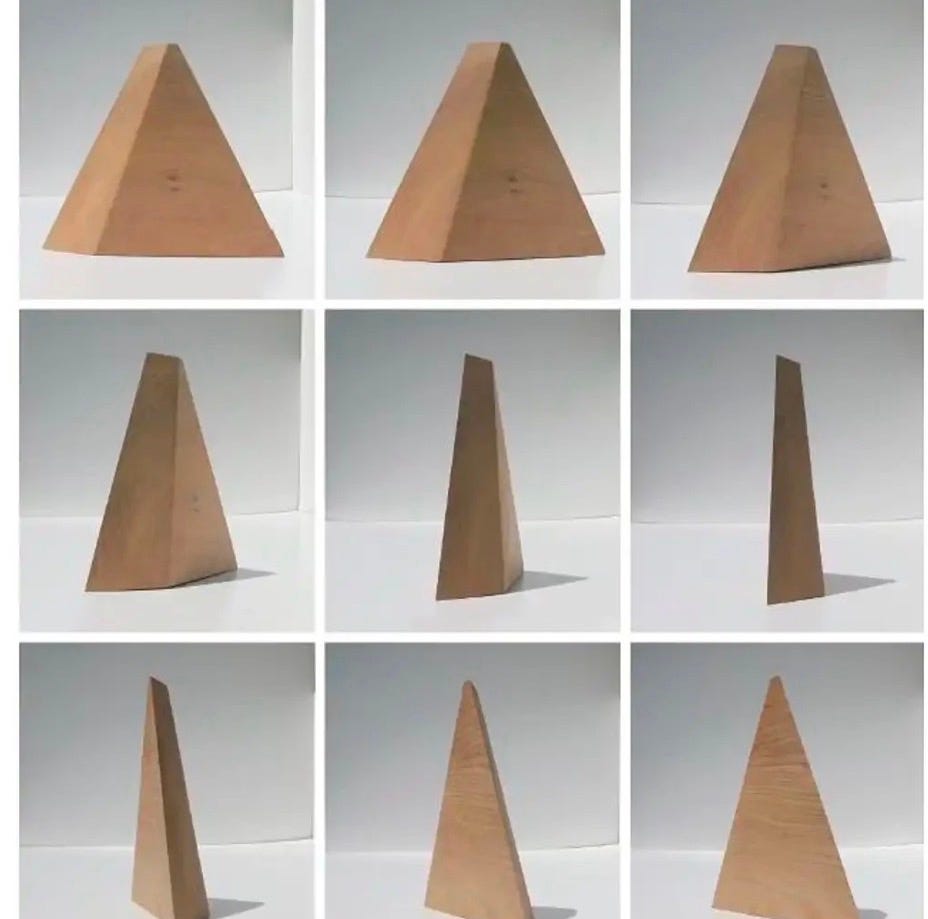
The firms website had this to offer:
Conceived as a fragment of the city, pivoted and lifted into the vertical plane, the tower assumes an exceptional silhouette that shifts in appearance according to the viewer’s position within the city’s network of axes and monuments. Its triangular form preserves generous views of the sky and reduces the projection of shadows onto neighboring buildings. Located on the Place de la Porte de Versailles, the base of the tower is open to the public, stretching along Avenue Ernest Renan and recreating a lively street frontage, while providing a link between the historic city center and Greater Paris.
Paris-based writer and critic, Andrew Ayers offered a summary of sorts:
For its detractors, Triangle is a project from a bygone age that leaves a stain on Hidalgo’s legacy; for its champions, it symbolizes the city’s dynamism and supplies the first-rate, state-of-the-art offices that Paris currently lacks. Whatever its merits and drawbacks, it will be the city’s last skyscraper, at any rate for the foreseeable future: in 2023, the city council—which counted a higher number of Ecologist Party members following the 2020 municipal elections—voted to bring the maximum building height back down to 37 meters. That restriction does not apply to the business district of La Défense, however, where skyscraper construction continues.
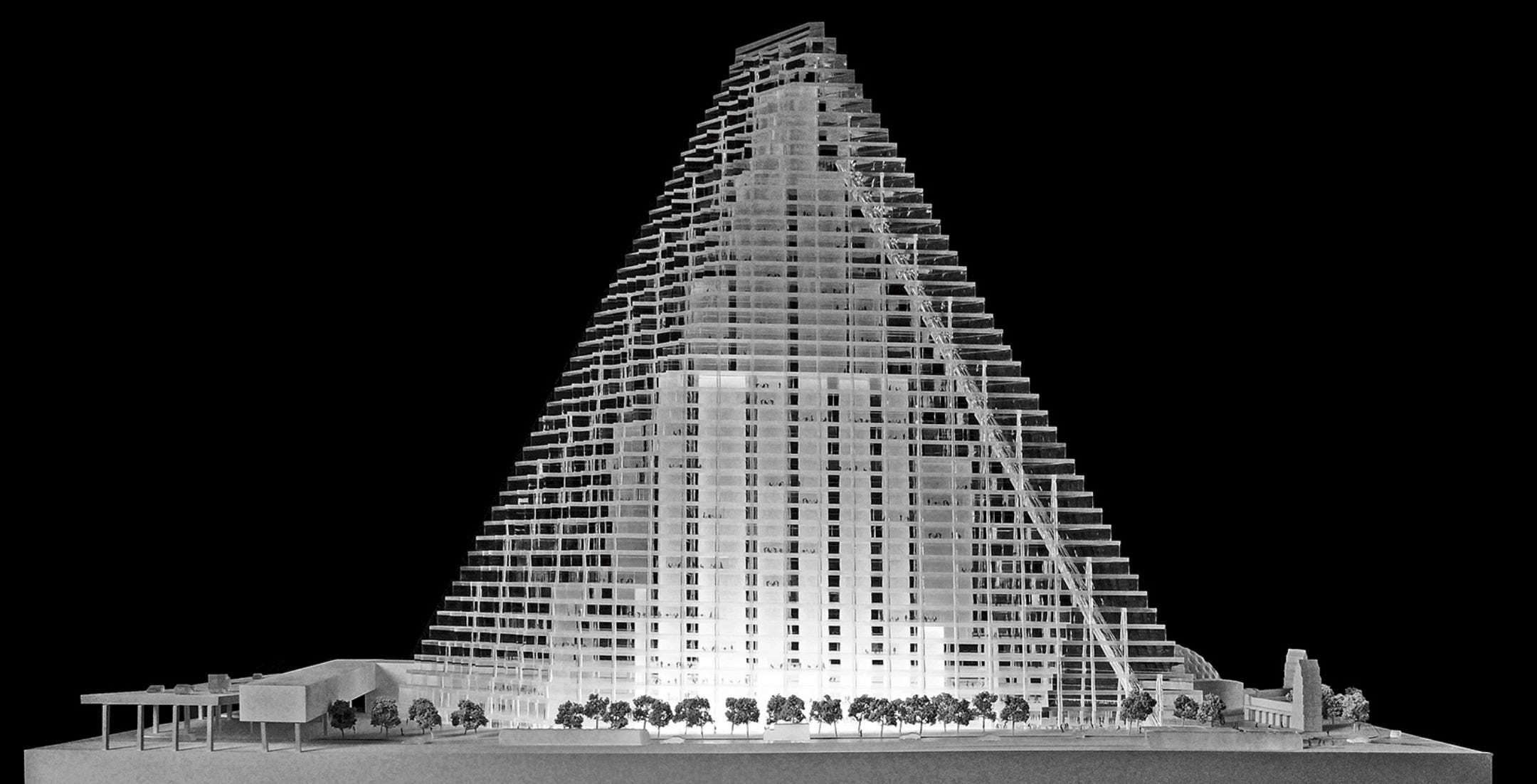
For those who opposed the Tour Triangle, several aspects of the design may have provided at least some measure of reassurance. The tower was carefully shaped and positioned to minimize the shadows cast on the surrounding neighborhood. Its distinctive form also helped address concerns about sight lines within one of the world’s most politically and culturally sensitive urban environments.
As shown in the third image gallery from the top above, the building presents only its narrow edge when viewed from central Paris, while its broader façade is oriented along less sensitive viewing lanes. In addition, the southeast elevation is clad with approximately 1,000 square meters of photovoltaic panels, which are reportedly capable of supplying enough electricity to meet nearly 35 percent of the building’s office energy needs.
In the end, time will tell whether the Tour Triangle is to achieve the level of public and critical acceptance that the Eiffel Tower and the Lourve Pyramid have attained.